UK Type 2 Diabetes Patients Skip Annual Foot Checks While Private Clinics Offer Retinal Scans
For people living with type 2 diabetes in the UK, the annual foot check is a cornerstone of preventive care. It is meant to catch early signs of peripheral neuropathy and vascular disease before a minor blister becomes a non-healing ulcer. Yet data from the National Diabetes Audit suggest that roughly one in four patients do not attend their foot examination each year. At the same time, private high-street clinics are marketing retinal scans directly to patients, offering a quick, tangible result for around £30. The contrast raises an uncomfortable question: why do we pay out-of-pocket to look at our eyes while neglecting a check that could save our feet?
Annual Foot Checks: A Standard of Care That Many Skip
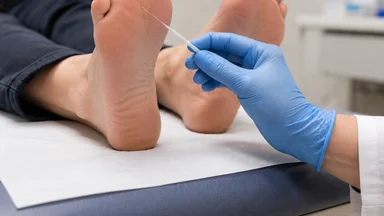
The National Institute for Health and Care Excellence (NICE) guidelines are clear: everyone with type 2 diabetes should receive a foot examination at least once a year. The check includes inspection for calluses, fissures, and deformities, assessment of peripheral pulses, and a monofilament test for loss of protective sensation. When performed consistently, this simple screening reduces the incidence of foot ulcers by roughly 50%.
Despite this, uptake remains patchy. The National Diabetes Audit for 2023–2024 reported that only 76% of people with type 2 diabetes in England and Wales received all nine care processes, which include foot checks. That leaves approximately 1.2 million individuals without documented foot surveillance. The consequences are severe: diabetic foot ulcers precede about 80% of non-traumatic lower-limb amputations, and the five-year mortality after amputation exceeds that of many cancers.
Peripheral neuropathy often develops silently. Patients may not notice numbness until they step on a sharp object and feel nothing. By the time a wound appears, infection may have already set in. General practitioners (GPs) in surveys cite time constraints as a major barrier: a typical 10-minute appointment leaves little room to remove shoes and socks, conduct the monofilament test, and discuss findings, especially when the patient has multiple other concerns.
Some practices have tried to improve uptake by delegating foot checks to practice nurses or healthcare assistants. But staffing shortages and competing priorities—such as blood pressure checks and medication reviews—mean foot care often falls to the bottom of the list. As one GP told Pulse magazine: “I know I should do it, but when the patient is already 15 minutes late and I have four more people waiting, the foot check is the first thing I drop.”
The problem is not limited to GP surgeries. In a 2022 survey by Diabetes UK, nearly a third of respondents reported that their healthcare professional had never examined their feet during a diabetes appointment. Among those who did receive a foot check, many said it was rushed or incomplete. For instance, some patients recalled that the clinician only looked at their feet briefly without using a monofilament, or did not check between the toes where ulcers often start. These anecdotal reports align with audit data showing wide variation in the quality of foot examinations across practices.
Private Retinal Scans Fill a Gap—But at a Cost
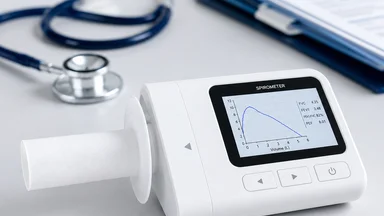
Meanwhile, private retinal screening has become a growing market. Companies such as Optegra, OcuPlan, and local opticians offer diabetic retinal photography for fees typically between £25 and £50. The scans produce a high-resolution image of the retina, which is then graded for signs of diabetic retinopathy—a leading cause of vision loss in working-age adults.
The NHS diabetic eye screening programme already achieves high uptake, with around 82% of eligible patients attending in 2023–2024. But private providers market convenience: no need to wait for an NHS appointment, results available within minutes, and a printed image to take home. For some patients, the scan provides reassurance that their eyes are “normal,” even if they have not had a foot check in years.
There is a financial cost, of course. For a patient on multiple medications and possibly on a tight budget, £30 is not trivial. Yet many are willing to pay for peace of mind, especially if they have noticed subtle changes in their vision. The problem is that a normal retinal scan does not guarantee healthy feet. Microvascular damage affects both organs, but the progression can be asynchronous.
Private clinics do not routinely share results with the patient’s GP unless the patient signs a consent form. Even when they do, the report may not be integrated into the practice’s diabetes recall system. This fragmentation means that a patient who pays for a retinal scan might still miss their NHS foot check, and the GP may be unaware of either event.
There is also a risk of false reassurance. A single normal retinal image does not rule out early retinopathy that might be missed due to image quality or grading error. Moreover, some private providers may not follow the same quality assurance standards as the NHS screening programme. A 2023 investigation by Which? found that several private clinics failed to meet national guidelines for diabetic eye screening, including inadequate training of graders and lack of audit trails. Patients who pay for a scan may assume it is equivalent to the NHS test, but that is not always the case.
The Metabolic Link Between Feet and Eyes
Both diabetic retinopathy and peripheral neuropathy stem from chronic hyperglycaemia. Elevated HbA1c damages the endothelial lining of small blood vessels, leading to capillary leakage in the retina and reduced blood flow to peripheral nerves. The underlying pathology is similar, but the clinical manifestations differ dramatically.
Retinopathy is detected through retinal photography, which reveals microaneurysms, haemorrhages, and exudates. Early proliferative changes can be treated with laser photocoagulation or anti-VEGF injections, preserving sight. Neuropathy is assessed by the monofilament test: a 10-gram nylon filament is pressed against the sole of the foot. If the patient cannot feel it at multiple sites, protective sensation is lost.
Diabetes UK emphasises that both checks are equally important. The charity’s annual “15 Minutes to Save Your Feet” campaign encourages patients to remove their shoes and socks during any diabetes review. Yet the campaign’s impact is hard to measure. Uptake of foot checks has risen only modestly in the past decade, while retinal screening rates have remained stable or improved.
One reason for the disparity may be that retinal screening is often conducted at dedicated, off-site appointments with a clear process and a tangible outcome—a photograph. Foot checks, by contrast, happen in the GP surgery, often as an afterthought. The patient may leave without knowing the result of the monofilament test, whereas a retinal scan provides an image they can see and keep.
There is also a difference in the perceived severity of complications. Vision loss is immediately disabling, while foot numbness may go unnoticed for years. But the long-term consequences of neuropathy—ulceration, infection, amputation—are equally devastating. A patient with loss of protective sensation has a roughly 7–10% annual risk of developing a foot ulcer, and once an ulcer occurs, the risk of amputation within five years is around 20%.
Why Patients Prioritise Vision Over Feet
Patient surveys consistently show that vision loss is one of the most feared complications of diabetes. A 2022 survey by the charity Diabetes UK found that 68% of respondents rated sight loss as their top concern, compared with 22% for foot amputation. This fear drives behaviour: patients are more likely to attend eye screening and to seek private scans if they perceive delays.
Foot numbness, in contrast, is easy to ignore. It develops gradually, often over years. Patients may adapt by walking more carefully or wearing thicker socks. They may not realise that the absence of pain is itself a danger sign. As one patient from Manchester told a Diabetes UK focus group: “I can see my eyes. I can’t see my feet. I just assume they’re fine.”
The foot check itself can feel time-consuming and intrusive. Removing shoes and socks in a cold consultation room, having someone touch your feet, and waiting for the result—all of this takes effort. For a patient who is already managing multiple appointments, the foot check may seem like a low priority compared with a blood test or medication review.
There is also a psychological dimension. Admitting that you have lost feeling in your feet can be frightening. It forces a confrontation with the reality of diabetes progression. A retinal scan, by contrast, can offer immediate reassurance: “Your eyes look good.” That positive feedback loop reinforces the behaviour, while the foot check offers no such reward.
Some patients also report embarrassment about the appearance of their feet—corns, calluses, or fungal infections—which makes them reluctant to show them. This is a barrier that clinicians can address by normalising foot checks and creating a non-judgemental environment. A simple phrase like “I check everyone’s feet, it’s routine” can reduce anxiety.
GP Perspective: The Real-World Barriers
From a GP’s standpoint, the barriers to performing foot checks are structural. The Quality and Outcomes Framework (QOF) incentivises retinal screening, blood pressure control, and HbA1c measurement, but foot checks are not separately rewarded. Practices that achieve high foot-check rates do so through local initiatives, not national policy.
Lack of chiropody staff is another issue. Many practices do not have an in-house podiatrist. When a foot check reveals a callus or a minor wound, the GP must refer the patient to a community podiatry service, which may have waiting times of weeks. This discourages some clinicians from looking too closely, knowing they cannot offer timely follow-up.
Patient forgetfulness and competing priorities are well documented. A patient who comes in for a routine diabetes review may have a list of concerns: a new cough, a sore knee, a request for a repeat prescription. By the time the GP addresses those, the foot check is squeezed out. Some practices have tried “foot check only” appointments, but these are hard to schedule when demand for acute care is high.
Clinical inertia also plays a role. If a patient has no symptoms and no history of foot problems, the GP may assume the feet are healthy. But neuropathy can be present without symptoms, and the annual check is precisely meant to detect it before it causes harm. The combination of time pressure, low incentives, and the absence of patient demand creates a perfect storm for omission.
There is also a training gap. Many GPs and practice nurses feel their undergraduate training in foot examination was insufficient. A 2021 survey of GP trainees found that only a third felt confident performing a monofilament test. This lack of confidence leads to avoidance. Practices that invest in regular skills updates and provide simple visual aids—like a poster showing the monofilament testing sites—tend to have higher completion rates.
What a Combined Screening Model Could Look Like
Several pilot programmes have explored integrating foot and eye checks into a single diabetes review. In Leicester, a project called “One Stop Diabetes Shop” offered retinal screening, foot examination, and blood tests in a single visit at a community hub. Early results showed an increase in foot check completion from 65% to 89% among attendees, with high patient satisfaction.
Text message reminders have also shown promise. A trial in London found that sending a simple SMS the day before a diabetes appointment, asking patients to “remove shoes and socks before seeing the nurse,” doubled the rate of foot examination documentation. The cost was negligible, but the effect was significant.
Pharmacy-based monofilament testing is another avenue under exploration. In some areas, community pharmacists have been trained to perform the 10-gram monofilament test and refer patients with abnormal findings to their GP. This could reach patients who rarely attend their surgery, though concerns about quality assurance and follow-up remain.
The cost per case detected is likely lower for combined screening than for separate visits, because travel time and clinic overheads are shared. However, implementation requires coordination between primary care, optometry, and podiatry services—a challenge in a fragmented NHS. The diabetes hubs that exist in some regions are a step in the right direction, but they cover only a fraction of the population.
Another model gaining traction is the use of digital podiatry platforms. Some trusts now offer remote foot assessment via smartphone photos, where patients upload images of their feet and a podiatrist reviews them. While not a replacement for the monofilament test, this can triage patients who need an in-person examination. Early pilot data from North West London showed that remote triage reduced unnecessary clinic visits by about 30%, freeing up capacity for high-risk patients.
From an economic perspective, the argument for integrated screening is strong. The cost of a foot ulcer to the NHS is estimated at roughly £8,000–£13,000 per episode, not including the cost of amputation or long-term disability. A combined screening visit that costs around £50–80 could prevent multiple ulcers and save thousands per patient. Yet the upfront investment in coordination and IT systems is a barrier that requires national-level commitment.
Practical Steps for Clinicians and Patients
For clinicians, the simplest change is to make foot checks a routine part of every diabetes consultation, not just the annual review. Asking the patient to remove shoes and socks while taking their blood pressure can save time. Using a 10-gram monofilament takes less than a minute. Documenting the result, even as a tick-box, creates a record that can be tracked over time.
Patients can advocate for themselves by reminding their GP or nurse to check their feet at every visit. At home, a simple mirror on the floor can help inspect the soles for cuts or blisters. Those at higher risk—previous ulcer, neuropathy, or peripheral vascular disease—should consider a daily foot inspection as part of their routine.
Private retinal scans are not a substitute for NHS screening or foot checks. Patients who choose to pay for a scan should ensure the results are shared with their GP. A normal retinal image does not mean the feet are safe, and a foot check should still be scheduled. Likewise, a normal foot check does not rule out retinopathy; both are needed.
Locally, patients and clinicians can push for integrated check-up pathways. This might mean a single annual appointment where eyes, feet, and blood tests are done together. It might mean a text reminder that says, “Your diabetes check is next week. Please wear socks you can remove easily.” Small changes in process can close the gap between what we know works and what we actually do.
Ultimately, the gap between foot and eye screening reflects deeper issues in diabetes care: fragmented services, competing incentives, and a mismatch between patient priorities and clinical needs. Closing that gap will require action at every level—from national policy that rewards foot checks, to local initiatives that make them easier, to individual consultations where a few extra seconds can save a limb.
Disclaimer: This article is for informational purposes only and does not constitute personalised medical advice. Readers should consult their healthcare provider for advice tailored to their individual circumstances.