UK General Practice Atrial Fibrillation Detections Drop When ECG Machines Sit Unused
Atrial fibrillation (AF) is the most common sustained cardiac arrhythmia in adults, and it is a leading cause of preventable stroke. In the United Kingdom, an estimated 1.5 million people have AF, but perhaps a third remain undiagnosed. The diagnostic tool is simple, cheap, and reliable: a 12-lead electrocardiogram (ECG) machine, which has been standard in GP surgeries for decades. Yet recent data from NHS Digital and national audits show that the number of new AF diagnoses in primary care has declined over the past three years, even as the population ages. Something in the diagnostic chain is failing.
A Silent Warning Sign That Gets Missed
Atrial fibrillation often produces no symptoms at all. A person can have a heart rhythm that races chaotically at 140 beats per minute and feel only mild fatigue or shortness of breath. Many learn they have AF only after a stroke has already damaged part of their brain. The arrhythmia causes blood to pool in the left atrial appendage, where clots form, and when those clots dislodge, they travel to the cerebral arteries.
ECG machines detect AF with high sensitivity and specificity. A single 12-lead tracing can confirm the diagnosis in seconds. For paroxysmal AF—episodes that come and go—ambulatory monitors or handheld single-lead devices can capture the rhythm over days or weeks. The technology is not the bottleneck.
Yet the UK National Audit of Cardiac Rhythm Management, which collects data from all NHS trusts, reported that the rate of new AF diagnoses per 1,000 patient-years fell from 5.3 in 2021 to 4.8 in 2023. A similar trend appears in the Quality and Outcomes Framework (QOF) data, which tracks GP practice performance. The proportion of patients over 65 on the AF register—a proxy for detection—has plateaued, while the prevalence of AF in the community continues to rise.
Something is blocking the diagnostic chain. The gap is widening, and the consequences are not abstract. Each undiagnosed case of AF carries a five-fold increased risk of stroke. In the UK, AF accounts for roughly one in five of all ischaemic strokes, and those strokes tend to be more severe than strokes from other causes.
Why ECG Machines Gather Dust in GP Surgeries
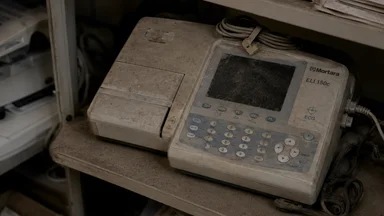
Walk into a typical GP surgery in England, and you will likely find an ECG machine. It may be in a treatment room, covered in dust, or stored in a cupboard. According to a 2024 survey by the British Heart Foundation of 1,200 GP practices across England, roughly one in five practices reported that their ECG machine was not functional or not routinely used. The reasons are multiple and interlocking.
Time is the most obvious constraint. The average GP appointment in England lasts about nine minutes. Within that window, the clinician must address the patient's presenting complaint, review medications, check blood pressure, and perhaps update the electronic record. Adding a pulse check—which takes about 30 seconds—and then an ECG if the pulse is irregular—another five minutes—can feel impossible. Many GPs report that they simply forget or deprioritise the pulse check when they are running behind.
Training gaps compound the problem. Medical students and GP trainees receive limited instruction in ECG interpretation. Practice nurses, who often perform health checks for patients over 65, may not be trained to recognise the subtle signs of an irregular pulse. A study published in the British Journal of General Practice in 2023 found that only a third of practice nurses felt confident in using an ECG machine, and fewer than half had received any formal training in the past two years.
Funding models also skew priorities. The QOF rewards practices for measuring blood pressure and cholesterol, but the incentives for AF detection are weaker. A practice earns points for maintaining a register of AF patients and for prescribing anticoagulation to those at risk, but there is no direct payment for the act of screening itself. As a result, practices may invest in blood pressure monitors and cholesterol-lowering drugs while letting ECG machines fall into disrepair.
Old machines are not replaced, and new ones are not purchased. The NHS capital budget for primary care equipment has been flat for years. In some regions, GP practices report that their ECG machine is more than a decade old, with worn-out cables and faded printouts. The cost of a new 12-lead machine is around £2,000 to £4,000—modest by NHS standards, but enough to deter cash-strapped practices that are already struggling with premises costs and staff salaries.
Time pressure is the most commonly cited barrier to pulse checking, but there are also issues of role clarity: who is responsible for the pulse check? The GP? The practice nurse? The healthcare assistant? In many practices, the task falls between stools. The GP assumes the nurse will do it during the annual health check; the nurse assumes the GP will do it during the consultation; neither does it. Training is another factor. Some clinicians have never been taught to palpate a pulse properly, or they confuse a regularly irregular rhythm with sinus arrhythmia. A 2022 survey of GP trainees found that fewer than half could correctly identify an irregularly irregular pulse on a simulated patient. The skill is not difficult, but it is not taught systematically. Finally, there is the question of incentives. The QOF does not reward pulse checking directly. It rewards having a register of AF patients, but not the act of finding them. Practices that invest time in screening may see no immediate financial return, even though they will prevent strokes in the long run. The system rewards treatment, not detection.
The Stroke Link That Should Alarm Everyone
The link between AF and stroke is well established. AF increases the risk of stroke by a factor of five, and the risk rises with age. Approximately 20% of all strokes in the UK are attributed to AF, and those strokes tend to be more disabling and more likely to be fatal. A 2022 analysis from the Stroke Association estimated that AF-related strokes cost the NHS about £45,000 per patient over the long term, including acute care, rehabilitation, and ongoing support.
Anticoagulation with direct oral anticoagulants (DOACs) such as apixaban or rivaroxaban reduces the risk of stroke by about two-thirds in patients with AF who have additional risk factors. However, the benefit depends on individual patient characteristics, including bleeding risk, kidney function, and other comorbidities. Warfarin is also effective, though it requires regular monitoring. The drugs are not expensive—generic DOACs cost the NHS roughly £50 to £80 per month per patient—and the number needed to treat to prevent one stroke is low. For patients with CHA2DS2-VASc scores of 2 or more, the benefit of anticoagulation clearly outweighs the bleeding risk, but a careful risk-benefit assessment is essential for each patient.
Yet many patients are never offered anticoagulation because they are never diagnosed. A 2021 study in the Lancet estimated that undiagnosed AF in the UK leads to roughly 10,000 preventable strokes each year. That is 10,000 people who might have avoided a devastating event if their arrhythmia had been caught in time. The human cost is incalculable, but the financial cost to the NHS runs into hundreds of millions of pounds annually.
The tragedy is that the intervention is simple and cheap. A pulse check costs nothing. An ECG costs a few pounds. A year of anticoagulation costs less than a thousand pounds. A stroke costs tens of thousands. The arithmetic is straightforward, but the system is not wired to act on it.
What the NICE Guidelines Actually Say
The National Institute for Health and Care Excellence (NICE) has been clear about AF detection since its 2021 guideline update. The recommendation is that clinicians should opportunistically check the pulse of any patient over 65 who presents for any reason, and if the pulse is irregular, they should confirm with a 12-lead ECG. For patients with suspected paroxysmal AF, the guideline recommends ambulatory ECG monitoring for 24 to 48 hours, or longer with a handheld event recorder.
The guidelines have not changed since 2021. The evidence base is stable. The problem is implementation. A 2024 audit by the Royal College of General Practitioners found that only about half of GP practices in England had a formal protocol for opportunistic pulse checking. Many practices rely on the clinician's memory or the patient's request, which is unreliable.
Pulse checking itself takes about 30 seconds. You place two fingers on the radial artery, count the beats for 15 seconds, multiply by four, and note whether the rhythm is regular. If it is irregular, you do an ECG. The skill is not arcane. Yet in the rush of a nine-minute appointment, the pulse check is often skipped. A 2023 observational study in the British Medical Journal found that only about one in four patients over 65 had a documented pulse check in the preceding 12 months, even though most had seen their GP at least once during that period.
The disconnect between guidelines and practice is not due to ignorance. Most GPs know the recommendation. But knowing and doing are different things when the system does not support the doing. The NHS has invested heavily in electronic health records and digital tools, but the simple act of feeling a pulse remains a low-tech, high-value intervention that is systematically undervalued.
A Pilot Program That Turned Things Around
In North West London, a cluster of 25 GP practices decided to try something different. In 2022, they launched a pilot program in which practice nurses were trained to perform pulse checks on all patients over 65 attending for any reason, and to use a handheld single-lead ECG device if the pulse was irregular. The devices, which cost about £300 each, connected to a smartphone app and transmitted the tracing to a GP for interpretation.
The results were striking. Over the first 12 months, the detection rate for new AF rose from 4.2 to 5.9 per 1,000 patient-years, an increase of about 40% compared to the previous year. The cost per new diagnosis was under £200, including the cost of the device and the nurse's time. Stroke admissions from the same cohort fell by a small but measurable amount in the following year, though the numbers are too small to be definitive.
The pilot was not a randomised trial, and the improvements may be partly due to the Hawthorne effect—the novelty of the program itself. But the experience suggests that simple, low-cost interventions can overcome the barriers to detection. The handheld device eliminated the need to find and clean a 12-lead machine. The nurse took ownership of the pulse check, removing the ambiguity about who was responsible. And the immediate feedback of the ECG tracing motivated both the nurse and the patient.
Other regions have taken note. In Greater Manchester, a similar program is under way, using community pharmacists as well as practice nurses. In Scotland, NHS Education for Scotland has developed an online training module for pulse checking and basic ECG interpretation. The uptake is slow, but the template exists.
Simple Levers That Could Reverse the Trend
The evidence points to several straightforward policy changes that could move the needle. One is to reimburse GP practices for each new AF diagnosis, either through a direct payment or through a revised QOF indicator. This would create a financial incentive for detection, rather than relying on altruism and good intentions. The cost would be modest—a few hundred pounds per diagnosis—compared to the tens of thousands saved per stroke prevented.
Another lever is to make ECG machines part of the essential equipment list for GP practices, with central funding for purchase and maintenance. The NHS has such lists for defibrillators and oxygen cylinders, but not for ECG machines. A small capital investment could ensure that every practice has a functioning, modern device, rather than a relic from the 1990s.
Training is a third lever. Medical schools and GP training programmes could incorporate pulse checking and ECG interpretation into their core curricula. Practice nurses and healthcare assistants could be trained in a half-day workshop. The skills are not complex, but they require deliberate practice and reinforcement.
Finally, a national screening programme for AF in people over 70 could be considered. The UK National Screening Committee has reviewed the evidence and has not recommended it, citing uncertainty about the balance of benefits and harms. But the committee's position is not static, and the accumulating data from pilot programs may shift the calculus. The example of the North West London pilot suggests that opportunistic screening integrated into routine care can be effective without the overhead of a formal programme.
Uncertainties and Counter-Arguments
Not everyone agrees that more screening is the answer. Some argue that opportunistic pulse checking in primary care already captures most cases, and that the apparent decline in new diagnoses may reflect better coding rather than true under-detection. Others point out that screening can lead to overdiagnosis of clinically insignificant AF, particularly in older patients with short, asymptomatic episodes that may never cause harm. The risk of bleeding from anticoagulation must be weighed carefully; for some patients, the harms of treatment may outweigh the benefits.
There is also the question of capacity. GP practices are already stretched, and adding another mandatory task—even a 30-second pulse check—could increase burnout and reduce quality of care for other conditions. The North West London pilot required dedicated nurse time and a specific protocol; scaling it nationally would require significant investment in training and equipment.
Moreover, the evidence for population-based screening is not yet conclusive. Randomised trials such as the STROKESTOP study in Sweden have shown that systematic screening can increase AF detection, but they have not demonstrated a clear reduction in stroke incidence. The UK National Screening Committee has therefore maintained a cautious stance, recommending further research before any national programme is implemented.
These counter-arguments do not negate the problem, but they highlight the need for a balanced approach. The goal is not to screen everyone, but to ensure that the opportunities for detection that already exist in routine care are not missed. The gap between guidelines and practice is real, but closing it will require careful consideration of costs, benefits, and unintended consequences.
None of these levers is a silver bullet. The barriers to AF detection are systemic, and they reflect deeper issues in primary care: underfunding, workforce shortages, and the relentless pressure of demand. But the problem is not intractable. The tools exist, the guidelines are clear, and the benefits are large. The failure is one of implementation, not of knowledge.
Atrial fibrillation is a condition that can be managed effectively once it is found. The tragedy is that so many people never get that chance. The ECG machines are there, waiting to be used. Whether the system can adapt to use them more effectively remains an open question, one that will require sustained effort from policymakers, clinicians, and patients alike.
This article is for informational purposes only and does not constitute medical advice. Readers should consult their healthcare provider for personal health decisions.