India Public Cervical Screening Offers VIA Tests But Delays HPV PCR Results
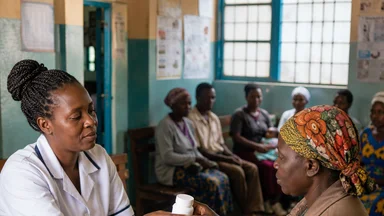
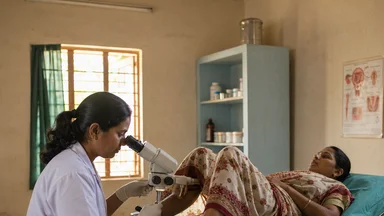
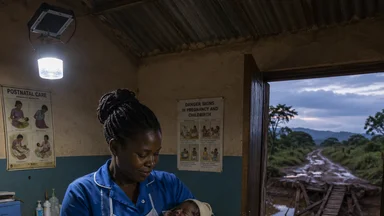
In a primary health centre in rural Maharashtra, a 38-year-old woman undergoes cervical screening. Within minutes, the nurse applies acetic acid and inspects the cervix—a positive VIA result. But the confirmatory HPV PCR test, sent to a district lab, takes three weeks to return. By then, the woman has not returned, and the clinic struggles to track her down. This scenario, described in a 2023 report by the Ministry of Health on screening bottlenecks, plays out across India, where the public screening program offers speed with VIA but suffers from delays in HPV PCR results, creating a clinical dilemma that experts cannot agree on.
VIA Results in Minutes, HPV PCR Takes Weeks—Why the Gap Matters
Visual inspection with acetic acid (VIA) is a low-tech, low-cost method that yields results immediately. A nurse or doctor applies dilute acetic acid to the cervix and looks for white patches that indicate abnormal cells. It requires no lab, no electricity, and minimal training. In India's public health system, VIA is the backbone of cervical cancer screening at primary health centres.
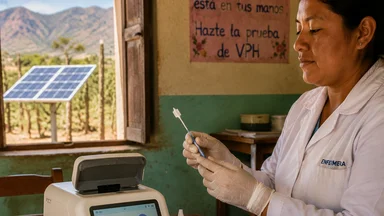
In contrast, HPV PCR testing detects high-risk strains of the human papillomavirus by amplifying viral DNA. It is more sensitive and specific than VIA, but it requires a well-equipped laboratory, trained technicians, and a cold chain for sample transport. In rural India, samples from sub-centres are batched and sent to district labs, a journey that can take two to four weeks. Results then travel back through the same channels, often by paper or slow digital systems.
The gap matters because India's screen-and-treat strategy aims to identify and treat precancerous lesions in a single visit. With VIA, a positive result can lead to immediate cryotherapy or referral. But if the HPV PCR result is delayed, women may not return for follow-up, and the opportunity for early treatment is lost. Clinicians face a tough choice: treat based on VIA alone, knowing its lower sensitivity, or wait for PCR and risk losing the patient to follow-up.
This tension is not merely theoretical. A study from the Indian Council of Medical Research found that roughly 30% of women with positive HPV tests never received their results, and among those who did, the median time to treatment was over six months. The speed of VIA is its strength, but the delay in PCR undermines the very purpose of screening.
India's Public Screening Program: Ambitious Targets, Operational Hurdles
India's national cervical cancer screening program, launched in 2016, targets women aged 30 to 65. With over 200 million eligible women, the program is one of the largest in the world. Primary health centres are tasked with offering VIA, while HPV PCR is reserved for referral at district-level labs. As of 2025, only about 30% of eligible women have been screened at least once, far below the 70% target set by the World Health Organization.
Coverage varies dramatically by state. Kerala and Tamil Nadu report screening rates above 50%, while states like Uttar Pradesh and Bihar struggle below 15%. Rural areas face the greatest challenges: shortage of trained nurses, lack of transport for samples, and weak health information systems. A 2023 report by the Ministry of Health noted that many primary health centres lack even basic supplies like acetic acid and speculums.
The program's reliance on VIA was a pragmatic choice. HPV PCR testing is expensive—roughly US$10–15 per test compared to less than US$1 for VIA. India's public health budget cannot absorb the cost of universal PCR screening. But the trade-off is lower sensitivity: VIA detects only 50–70% of precancerous lesions, meaning many women with high-risk HPV are missed.
Operational hurdles compound the problem. Sample transport from sub-centres to district labs relies on irregular courier services or health workers' personal vehicles. Results are often entered manually into registers, and women may not be notified if they have moved or changed phone numbers. A pilot project in Karnataka using a mobile app for result tracking showed promise, but scaling up remains slow.
Expert Split: Is VIA Alone Sufficient or Does HPV PCR Justify the Wait?
The debate among Indian experts is sharp. Dr. Radhika Singh, a gynaecologist at AIIMS Delhi, argues that VIA is adequate for the public program. “In resource-limited settings, VIA is feasible and can reduce mortality if done well. We cannot wait for perfect tests when women are dying,” she says. She points to studies showing that VIA screening programs in Tamil Nadu and Karnataka reduced cervical cancer incidence by roughly 20–30% over a decade.
Dr. Priya Mehta, an oncologist at Tata Memorial Hospital in Mumbai, disagrees. “VIA misses too many. HPV PCR is the gold standard recommended by WHO since 2021. We must invest in making it accessible,” she counters. She cites a cluster-randomized trial in Tamil Nadu that found HPV screening reduced cervical cancer incidence by 40% over eight years, compared to 20% for VIA alone. But she acknowledges that the trial's effectiveness relied on good follow-up, which is lacking in many real-world settings.
Some experts propose a middle ground: use VIA as a triage test, then confirm positives with HPV PCR. This hybrid approach would preserve the speed of VIA while adding the accuracy of PCR. But critics argue that it adds complexity and cost, and that women who test VIA-negative but HPV-positive would still be missed. A 2024 modelling study from the London School of Hygiene and Tropical Medicine suggested that a VIA-then-PCR strategy could prevent 15% more cancers than VIA alone, but only if PCR turnaround time is under two weeks.
The World Health Organization's 2021 guidelines recommend HPV DNA testing as the primary screening method, but they also acknowledge that VIA is an acceptable alternative in settings where PCR is not feasible. India's program has not yet adopted the WHO recommendation, citing cost and infrastructure constraints. The split reflects a deeper tension between ideal evidence and real-world implementation.
Trade-offs in Practice: Balancing Speed and Accuracy
The expert divide is not academic; it has real consequences for how resources are allocated and how women are counselled. Dr. Singh's approach prioritizes immediate action, arguing that a VIA-positive woman treated the same day is better than a PCR-positive woman lost to follow-up. She points to data from Tamil Nadu where VIA-based programs achieved treatment rates of 70–80% within one visit. In contrast, Dr. Mehta emphasizes that a false sense of security from VIA-negative results may delay diagnosis for women with high-risk HPV. She notes that in her Mumbai clinic, nearly 15% of women with normal VIA results were later found to have high-risk HPV on PCR, and some developed precancerous lesions within two years.
The trade-off is stark: VIA offers immediacy but misses up to half of precancerous lesions; HPV PCR is more accurate but loses women in the follow-up gap. Which approach yields better population-level outcomes depends on local health system performance. In settings where follow-up is strong, PCR likely saves more lives. Where follow-up is weak, VIA may do more good despite its lower sensitivity.
This tension is illustrated by contrasting experiences in two Indian states. In Kerala, where health infrastructure is relatively robust, a pilot program using HPV PCR with active tracking achieved a treatment rate of 85% within three months. In Bihar, a similar PCR program saw only 35% of women complete treatment, largely due to transport barriers and poor communication. In the same Bihar district, a VIA-based program achieved 70% treatment completion because women could be treated on the spot. These real-world examples show that the optimal test depends on context, not just on sensitivity and specificity.
The Evidence Base: What Trials Show About Outcomes
The evidence from trials is clear: HPV PCR screening is more effective than VIA in reducing cervical cancer incidence and mortality. The landmark cluster-randomized trial in Tamil Nadu, published in The Lancet in 2019, followed over 100,000 women for eight years. The HPV screening arm saw a 40% reduction in cervical cancer incidence and a 50% reduction in mortality, compared to 20% and 30% for VIA. However, the trial was conducted in a well-organized setting with dedicated staff and active follow-up.
Real-world effectiveness is often lower. A 2022 systematic review of screening programs in low- and middle-income countries found that HPV PCR linkage to treatment was poor in remote areas, with only 40–60% of women receiving results and completing treatment. In contrast, VIA-based programs achieved treatment rates of 70–80% because treatment could be offered immediately. This real-world effectiveness gap may narrow the apparent superiority of HPV PCR seen in trials.
Another challenge is the high prevalence of transient HPV infections, especially in younger women. A positive HPV test does not always mean cancer risk; many infections clear on their own. In India, where HPV prevalence is roughly 10–15% among women aged 30–65, a positive PCR result can cause anxiety and lead to unnecessary follow-up. VIA, by detecting visible lesions, may be more specific for clinically significant disease.
Cost-effectiveness analyses are mixed. A 2021 study from the Public Health Foundation of India estimated that HPV PCR screening every five years would cost roughly US$50 per woman over a lifetime, compared to US$15 for VIA every three years. But the additional cancers prevented by PCR made it cost-effective by WHO standards. However, the analysis assumed high coverage and follow-up, which are not guaranteed in practice.
Logistical Bottlenecks: From Sample Collection to Result Return
The journey of an HPV PCR sample from a rural sub-centre to a district lab is fraught with delays. First, the sample—a cervical swab placed in transport medium—must be kept at 2–8°C. Many sub-centres lack refrigerators, so samples are stored at room temperature, which can degrade DNA. Then, the sample waits for a courier, which may come only once a week. The trip to the lab can take two to four weeks, and the lab itself may have limited capacity, processing only a few dozen samples per day.
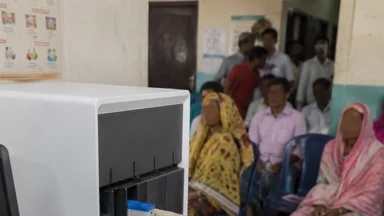
Once the result is ready, it must be sent back. In many districts, results are printed and mailed to the primary health centre, where a health worker must manually enter them into a register and contact the woman. Phone numbers are often incorrect or out of service. A 2024 audit in Uttar Pradesh found that 40% of women with positive HPV results were never notified. Among those who were, the median time from screening to result receipt was 45 days.
Mobile HPV testing vans piloted in Maharashtra have shown promise. These vans carry a portable PCR machine (GeneXpert) that can process samples in about 90 minutes. In a pilot covering 10,000 women, the vans achieved same-day results for 80% of participants, and treatment rates improved to 75%. However, the vans are expensive—roughly US$50,000 each—and require trained technicians and regular maintenance. Scaling up to cover the entire country would require thousands of vans.
Self-sampling kits, where women collect their own vaginal swabs at home, have increased screening uptake in some areas. A trial in Gujarat found that self-sampling doubled participation rates compared to clinic-based screening. But the kits still need to be transported to a lab, and result turnaround remains a problem. Digital tracking systems, such as the one being tested in Karnataka and Gujarat, use SMS alerts to notify women of their results and schedule follow-up. Early data show that SMS notification reduces the time to treatment by about two weeks.
Practical Steps: What Clinicians and Policymakers Can Do Now
Investing in point-of-care HPV tests is the most direct solution. Portable platforms like GeneXpert and careHPV can deliver results in 60–90 minutes, eliminating the need for sample transport. The cost per test is higher than VIA, but it could be offset by reducing the number of women lost to follow-up. India's National Health Mission is considering a phased rollout in high-burden districts, but funding remains a barrier.
Shortening result turnaround through SMS alerts and community health workers can help. In a pilot in Karnataka, health workers used a mobile app to send results directly to women's phones and followed up with home visits for those who did not respond. The program reduced the median time to treatment from 60 days to 25 days. Scaling such digital tools requires investment in training and data infrastructure, but the returns could be substantial.
Prioritizing high-risk women for PCR testing can make the most of limited resources. Women living with HIV, for example, have a five-fold higher risk of cervical cancer. The Indian program already recommends HPV PCR for HIV-positive women, but implementation is patchy. A targeted approach could focus PCR testing on this group, while continuing VIA for the general population.
Scaling up VIA training is essential for quality. A 2023 study found that VIA sensitivity varied widely between health workers, from 40% to 80%, depending on training and experience. Standardized training programs, regular refresher courses, and quality audits can improve performance. Some experts argue that a well-performed VIA is comparable to a poorly performed HPV test, so investing in VIA quality may be the most cost-effective strategy for now.
A hybrid model—VIA for immediate treatment of visible lesions, followed by PCR for triage of equivocal cases—could combine the strengths of both methods. This approach is being piloted in a few districts in Tamil Nadu, with early results showing improved detection rates without increasing loss to follow-up. However, the model requires careful coordination and may not be feasible in the most resource-constrained settings.
Ultimately, there is no one-size-fits-all solution. The choice between VIA and HPV PCR depends on local infrastructure, funding, and health system capacity. What works in a well-resourced district in Kerala may not work in a remote village in Bihar. The debate among experts reflects this complexity, and the evidence suggests that both approaches have a role to play. The goal is not to pick a winner, but to find the right balance for each context.
Disclaimer: This article is for informational purposes only and does not constitute medical advice. Screening decisions should be made in consultation with a qualified healthcare professional.