Pakistan Public Insurance Caps Diabetes Care to One Test Strip Daily
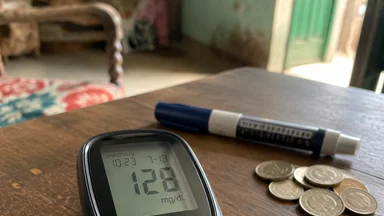
For millions of Pakistanis with diabetes, the day begins with a choice: test their blood sugar or save the strip for later. Under the Sehat Sahulat Program, the country's flagship public health insurance scheme, patients receive a maximum of 30 glucose test strips per month—enough for one test daily. For those on insulin, who clinically need four to eight checks per day, this cap transforms self-care into a rationing exercise. The policy reflects a tension between cost containment and clinical necessity that is playing out across low- and middle-income health systems.
One Strip Per Day: Pakistan’s Public Insurance Defines a Diabetes Ceiling
The Sehat Sahulat Program, launched in 2015 and now covering roughly 100 million people, is designed primarily for inpatient care. Diabetes supplies, including test strips, fall under a limited outpatient benefit package. The 30-strip monthly cap applies uniformly, regardless of diabetes type or treatment regimen. A patient on multiple daily insulin injections receives the same allotment as someone with diet-controlled type 2 diabetes.
Private insurance plans, by contrast, often cover unlimited strips or provide high annual limits. This creates a two-tier system where the wealthy can monitor their glucose adequately while public beneficiaries must stretch a meager supply. Dr. Ayesha Khan, an endocrinologist at Jinnah Postgraduate Medical Centre in Karachi, told Dawn that many of her patients on insulin test only once every two or three days. “They come in with hypoglycemia unawareness or dangerously high A1c levels because they are flying blind,” she said.
Patients adapt in ways that undermine their health. Some share strips with family members who also have diabetes. Others skip doses of insulin to conserve strips, reasoning that less insulin means less need to test. A 2023 study in the Journal of the Pakistan Medical Association found that among insulin-dependent patients in the Sehat Sahulat Program, 62% reported testing less than twice per week. The same study noted that 28% had experienced a severe hypoglycemic episode in the preceding year, compared with 12% of those with adequate strip access.
The policy logic is clear: strips are a recurring cost, and the program must stay within budget. But the clinical consequences ripple outward. Emergency visits for hypoglycemia, hospitalizations for diabetic ketoacidosis, and long-term complications like neuropathy and retinopathy all carry their own costs—many of which fall back on the same public insurance system.
Why One Strip Falls Short: The Clinical Reality of Insulin Therapy
International guidelines from the American Diabetes Association and the International Society for Pediatric and Adolescent Diabetes recommend that people with type 1 diabetes test blood glucose four to eight times daily. For type 2 patients on intensive insulin regimens, at least two tests per day are standard. These recommendations are based on evidence that frequent monitoring reduces hypoglycemia risk and improves glycemic control.
When a patient on insulin tests only once daily, they miss critical information. Blood glucose fluctuates throughout the day in response to meals, exercise, and insulin doses. A single morning reading cannot capture postprandial spikes or nocturnal lows. “It’s like trying to drive a car by looking through a straw,” said Dr. Rizwan Ahmed, a diabetologist at the Aga Khan University Hospital in Karachi. “You might avoid the big potholes, but you won’t see the curves.”
The consequences of blind dosing are measurable. A 2022 meta-analysis in The Lancet Diabetes & Endocrinology found that each additional daily glucose test was associated with a 0.3% reduction in A1c among insulin users. More importantly, frequent testing allows patients to detect and treat hypoglycemia early. Severe hypoglycemia—defined as an event requiring assistance—can lead to seizures, coma, or death. In Pakistan, emergency department visits for hypoglycemia are common, and many are preventable with adequate monitoring.
The cap also affects insulin dose adjustment. Patients are often advised to adjust their doses based on patterns in their glucose readings. With one strip per day, pattern recognition becomes impossible. Physicians may prescribe higher insulin doses out of caution, increasing the risk of hypoglycemia. Or they may keep doses too low, leading to persistent hyperglycemia and accelerated complications.
Short-term savings from strip rationing may thus drive long-term spending. A severe hypoglycemic episode requiring hospitalization can cost the Sehat Sahulat Program roughly US$ 100–200 per event—equivalent to several months' supply of strips. When patients develop chronic complications like end-stage renal disease or foot ulcers, the costs multiply exponentially.
The Sehat Sahulat Program: Design and Limitations
The Sehat Sahulat Program, administered by the state-owned National Health Services, Regulations, and Coordination division, is an ambitious attempt to provide financial protection to poor and vulnerable populations. It covers hospitalizations up to a certain annual limit and includes a defined list of outpatient services and supplies. Diabetes test strips were added to the outpatient benefit package in 2018, but the quantity was set at 30 per month without a clinical override mechanism.
The program’s design prioritizes budget predictability. The Ministry of Health negotiates fixed prices with strip manufacturers and allocates funds based on projected enrollment and utilization. A higher cap would increase per-patient costs and require either higher premiums, greater government subsidies, or cuts to other services. In a country where health spending is roughly 1% of GDP, such trade-offs are politically difficult.
Yet the cap applies uniformly, ignoring clinical nuance. A child with type 1 diabetes, who requires frequent testing to avoid life-threatening ketoacidosis, receives the same allotment as an elderly patient with type 2 diabetes on metformin alone. There is no mechanism for physicians to request an exception or for patients to appeal if their clinical need exceeds the standard benefit.
The program also lacks integration with other diabetes services. While some community health workers provide point-of-care glucose testing during home visits, these are irregular and not always available. A patient who misses a scheduled visit may go weeks without any glucose measurement. The result is a fragmented system where the most vulnerable patients fall through the cracks.
Despite these limitations, the Sehat Sahulat Program has expanded coverage dramatically. Enrollment grew from 3 million families in 2015 to an estimated 15 million families by 2025. The program has reduced catastrophic health expenditures for many conditions. But for chronic diseases like diabetes, which require continuous outpatient management, the benefit package remains inadequate.
How Patients Adapt: Rationing, Borrowing, and Black Markets
When official supply runs short, patients turn to informal channels. Some buy single strips from pharmacies at inflated prices—often US$ 0.10–0.20 per strip, compared with the program’s negotiated price of roughly US$ 0.05. Others borrow strips from neighbors or relatives who have diabetes but test less frequently. A 2024 qualitative study in the journal Global Health Action documented stories of patients sharing a single glucometer among multiple family members, wiping the lancet with alcohol between uses.
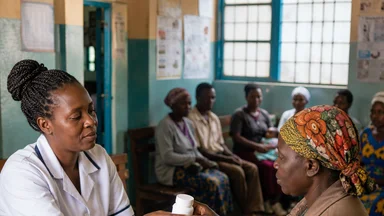
Community health workers, known as lady health workers in Pakistan, sometimes provide free glucose tests using their own supplies. But these visits are sporadic and cannot replace daily self-monitoring. Patients in rural areas, where health facilities are far apart, often go weeks without any measurement. “I test only when I go to the doctor, which is once a month,” said a 55-year-old insulin-dependent patient in Punjab, quoted in the study. “Otherwise, I just guess.”
The black market for test strips is thriving. In cities like Lahore and Karachi, vendors sell strips without prescription, often from unauthorized stalls near public hospitals. These strips may be expired, counterfeit, or improperly stored, giving inaccurate readings. Patients desperate for any data accept the risk. A 2022 investigation by Dawn found that up to 30% of strips sold in informal markets in Karachi failed quality checks.
Rationing has measurable health effects. A longitudinal study of Sehat Sahulat beneficiaries with diabetes, published in 2023 in the Pakistan Journal of Medical Sciences, found that the average A1c among insulin users was 9.8%, far above the target of 7.0%. Neuropathy was present in 42% of participants, and retinopathy in 28%. The authors estimated that improving testing frequency to at least two strips per day could reduce A1c by 1.5 percentage points over one year.
These adaptations reflect resilience, but they also highlight a system that shifts the burden of cost containment onto patients. Those with the least resources bear the greatest risk of complications, perpetuating a cycle of poverty and poor health.
Comparing Public Insurance Models: Lessons from India and Bangladesh
Pakistan is not alone in limiting diabetes supplies. India’s Ayushman Bharat, the world’s largest public health insurance program, does not cover outpatient test strips at all. Patients must buy them out-of-pocket or rely on state-level programs, which vary widely. Bangladesh’s Shasthyo Suroksha Karmasuchi includes a limited number of strips for insulin users—typically 50 per month—but enforcement is inconsistent.
Thailand offers a contrasting model. Its Universal Coverage Scheme provides free test strips for insulin-dependent patients, with a cap of 200 strips per month—enough for roughly six tests daily. This policy, introduced in 2012, was based on evidence that adequate monitoring reduces hospitalizations. A 2019 evaluation in the Journal of Diabetes Science and Technology found that hypoglycemia-related admissions among insulin users fell by 22% after the cap was raised.
Why the difference? Political will and diabetes burden play roles. Thailand has a higher diabetes prevalence and a stronger primary care infrastructure. Its health system also prioritizes chronic disease management, with dedicated funding for outpatient supplies. In South Asia, where health budgets are tighter and inpatient care dominates, outpatient supplies are often seen as optional extras.
The comparison suggests that reform is possible but requires a shift in thinking. Instead of viewing test strips as a cost to be minimized, policymakers could see them as an investment that reduces downstream spending. This argument is gaining traction among health economists, but it has not yet translated into policy change in Pakistan.
Another lesson comes from the UK's National Health Service, which covers test strips without a blanket cap but uses prescribing guidelines to encourage appropriate use. A similar approach in Pakistan could allow flexibility while controlling costs through bulk procurement and clinician oversight.
What Reform Would Cost—And What It Could Save
Raising the cap from one strip to four strips per day would cost the Sehat Sahulat Program roughly US$ 2–4 per patient per month, based on negotiated strip prices of US$ 0.05 each. For the estimated 2 million diabetes patients enrolled in the program, this would add US$ 48–96 million annually—a significant but not insurmountable increase compared with the program’s total diabetes budget of roughly US$ 15 million.
However, these costs could be offset by savings from reduced hospitalizations. Hypoglycemia-related admissions currently cost the program an estimated US$ 8–12 million per year. If better testing reduced these admissions by 20–30%, as suggested by the Thai experience, the net budget impact could be neutral or even negative. Additionally, preventing chronic complications like renal failure and amputation would yield long-term savings.
A cost-effectiveness analysis published in 2024 in the journal Diabetes Care modeled the impact of increasing strip coverage in Pakistan. The study found that providing four strips per day to insulin users would cost US$ 1,200 per quality-adjusted life year gained—well below the country’s GDP per capita, which is commonly used as a threshold for cost-effectiveness.
Critics argue that the savings are uncertain and that the program cannot afford the upfront investment. But the status quo also has costs—both financial and human. Every year, thousands of Pakistanis with diabetes develop preventable complications because they cannot monitor their glucose. The question is whether the system can shift from a reactive, hospitalization-focused model to a proactive, prevention-oriented one.
Reform does not require a blank check. Targeted changes—such as allowing physicians to prescribe higher strip counts for insulin users, negotiating bulk discounts, and investing in patient education—could improve outcomes without breaking the budget. The key is to design a benefit package that reflects clinical need rather than administrative convenience.
Practical Steps: Revisiting the Benefit Package Design
The first step is to introduce clinical flexibility. Instead of a flat 30-strip cap, the program could allow physicians to prescribe up to 120 strips per month for patients on intensive insulin therapy, with documentation of medical necessity. This would align coverage with guidelines while still controlling costs through prior authorization for high volumes.
Second, the program could create a tiered system based on diabetes type and treatment intensity. Patients with type 1 diabetes or those on multiple daily injections would receive a higher allotment, while those on oral medications or diet alone would receive fewer strips. Such tiering is common in other countries and would target resources to those who need them most.
Third, the government could negotiate bulk pricing with strip manufacturers through the National Procurement Agency. Current negotiated prices are already low by international standards, but further reductions may be possible through long-term contracts and pooled procurement with other public programs. The savings could fund expanded coverage.
Fourth, patient education on proper strip use could reduce waste. Many patients test at suboptimal times or fail to calibrate their meters correctly, leading to inaccurate readings and unnecessary retesting. Simple training programs, delivered through lady health workers, could improve the yield from each strip.
Finally, the program could pilot a telemonitoring program for high-risk patients. If patients could share their glucose readings with a central clinic, clinicians could adjust insulin doses remotely and identify problems early. This could reduce the need for frequent self-testing while maintaining safety. A pilot in Karachi, funded by the World Health Organization, is currently testing this approach with 500 patients. Early results suggest a 15% reduction in hypoglycemia events and improved patient satisfaction.
None of these steps are silver bullets. They require political commitment, administrative capacity, and funding. But they offer a path forward for a program that has already achieved much in expanding access to care. The next challenge is to ensure that access is meaningful—that the care provided actually meets patients' needs.
In the end, the debate over test strips is a microcosm of a larger question: Should public insurance programs prioritize acute care or invest in chronic disease management? The evidence increasingly points toward the latter. As diabetes rates rise across South Asia, the cost of inaction will only grow. Yet the path forward is not straightforward: increasing strip coverage requires difficult trade-offs with other health priorities, and the evidence from other settings may not fully translate to Pakistan's context. Policymakers must weigh the potential benefits against the risks of diverting resources from other essential services, and any reform should be accompanied by rigorous evaluation to ensure it delivers value.
Disclaimer: This article is for informational purposes only and does not constitute medical or policy advice. The specific recommendations mentioned, such as raising the cap to four strips per day, are illustrative examples based on modeling studies and are not official policy proposals. Individuals with diabetes should consult their healthcare provider for guidance on blood glucose monitoring and treatment.