Kenya Public Clinics Refill Antidepressants but Offer No Follow-Up Psychotherapy
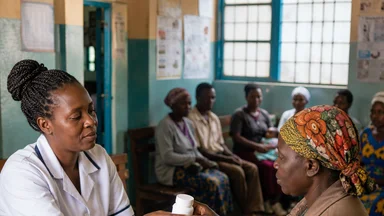
A patient with depression walks out of a public clinic in Kenya with a month's supply of fluoxetine or sertraline. The prescription is filled, the nurse nods, and the next patient is called. What rarely happens is a follow-up appointment for talk therapy—a structured conversation about thought patterns, stress triggers, or coping strategies. The gap between medication access and psychotherapy is not a minor oversight; it is a structural feature of a system built on scarcity. With only around 100 psychiatrists for 50 million people, Kenya relies on nurses and clinical officers to prescribe antidepressants under task-sharing protocols. But those protocols emphasize medication management, not psychosocial care. The result is a treatment model that addresses only half the equation.
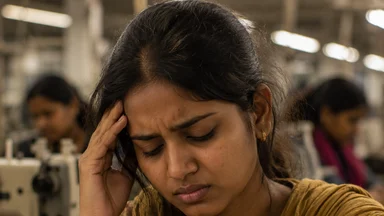
This pattern plays out across the wealth gradient. In private clinics in Nairobi, a patient can pay for both pills and weekly therapy sessions with a psychologist. In public facilities, the same diagnosis yields a prescription and a five-minute check-in. The WHO estimates that the treatment gap for depression in low- and middle-income countries exceeds 75%, and the absence of routine psychotherapy widens that gap. Patients are left to manage side effects, tapering schedules, and relapse risk on their own. Some stop antidepressants within three months because of nausea or insomnia, unaware that these side effects often fade. Others continue taking pills but never learn how to identify the triggers that push them back into despair.
Antidepressants alone have biological limits. SSRIs like fluoxetine increase serotonin availability in the synaptic cleft, improving mood, sleep, and appetite over weeks. But the mechanism is blunt. SSRIs do not teach a patient how to respond to a stressful job loss, a marital conflict, or the trauma of living in poverty. They raise the floor, but they do not build the ladder. Meta-analyses consistently show that combination therapy—antidepressants plus psychotherapy—outperforms either alone. A 2021 Cochrane review of 52 trials found that the combination reduced depression scores by roughly 0.5 standard deviations more than medication alone, a moderate but clinically meaningful effect. More importantly, combined therapy lowered relapse rates by about 20% over one to two years. Without psychotherapy, patients remain vulnerable to the same triggers that caused their depression in the first place.
The biological pathway explains only part of recovery. Depression is not simply a serotonin deficiency; it involves dysregulation of stress systems, inflammation, and neural plasticity. Psychotherapy can modulate these systems too. Cognitive-behavioral therapy (CBT) has been shown to reduce amygdala reactivity to negative stimuli and strengthen prefrontal control. In other words, talk therapy changes the brain—not just the mind. A medication-only approach ignores this neuroplastic potential.
A 2022 individual patient data meta-analysis found that the benefit of antidepressants over placebo is modest for mild depression and larger for severe cases. Yet even in severe depression, adding psychotherapy reduces residual symptoms and improves functioning. The question is not whether therapy helps, but how to deliver it in a system with no therapists.
Pills Without Talk: The Gap in Public Mental Health Care
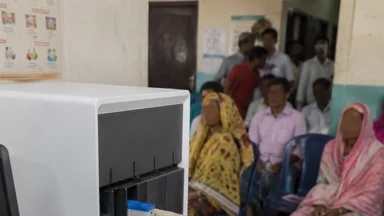
Public clinics in Kenya have made real progress in antidepressant access. Since the Ministry of Health added fluoxetine and amitriptyline to the essential medicines list, stockouts have become rare in most counties. Nurses and clinical officers, trained under the WHO's Mental Health Gap Action Programme (mhGAP), can diagnose depression and prescribe first-line antidepressants. For many patients, this is the first time their suffering is named and treated.
But the mhGAP guidelines also recommend brief psychological interventions—structured counseling delivered by trained non-specialists. In practice, these interventions are almost never implemented. A 2023 survey of primary care facilities in three Kenyan counties found that fewer than 5% offered any form of psychotherapy, even in group format. The reasons are predictable: shortage of trained counselors, lack of dedicated clinic time, and the perception that medication is faster and cheaper.
In Ghana, clinics prescribe antibiotics for diarrhea while stool cultures gather dust—a mismatch between what is easy to dispense and what is diagnostically appropriate. In mental health, the mismatch is between what fits a 10-minute visit (a prescription) and what requires 30 minutes or more (talk therapy). Without the latter, patients miss out on skills that medication cannot teach: how to challenge catastrophic thoughts, how to build social support, how to recognize early warning signs of relapse.
A System Built on Shortage: Task-Sharing in Practice
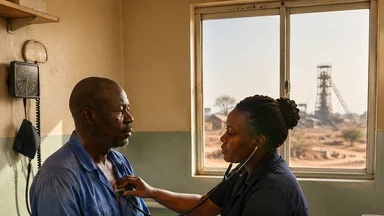
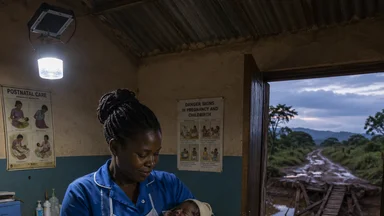
Kenya's mental health workforce is among the thinnest in the world. The ratio of psychiatrists to population is roughly 0.2 per 100,000—about 100 specialists for 50 million people. Clinical psychologists and psychiatric nurses are also scarce. To fill the gap, the Ministry of Health adopted task-sharing: training nurses and clinical officers in primary care to diagnose and treat common mental disorders.
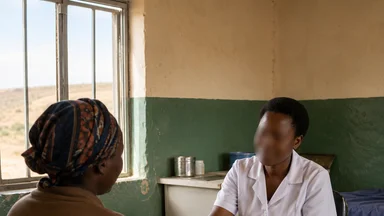
Under mhGAP, these non-specialist providers can prescribe antidepressants after a short training course—typically one to two weeks. The training covers diagnosis, medication dosing, and side-effect management. It includes a module on psychosocial support, but this is often skipped or condensed. Follow-up visits, when they happen, last five to ten minutes. The provider asks about adherence and side effects, then writes a refill. There is no time to explore the patient's life circumstances, no space for structured therapy.
A 2024 qualitative study in Kilifi County captured the frustration of clinical officers: they knew their patients needed counseling, but they lacked the time, the private room, and the training to deliver it. One officer said, "I can give them medicine, but I cannot give them hope." The WHO's mhGAP guidelines acknowledge the importance of psychological interventions, but they do not mandate them. In practice, the medication component is implemented; the talk component is not.
In Ghana, antibiotics are given for diarrhea without stool cultures—a diagnostic shortcut that misses the underlying cause. In mental health, the shortcut is to prescribe without talking. The system is designed for efficiency, not for recovery.
What Psychotherapy Could Add—Evidence from Trials
Controlled trials in low-resource settings demonstrate that brief psychotherapy can be effective. In Pakistan, a randomized trial of lay counselor–led CBT for depression reduced symptoms by roughly 50% at three months, compared to usual care. The intervention consisted of six to eight sessions delivered by community health workers with no prior mental health training. The cost per session was under US$5.
In Kenya, pilot studies have tested group therapy for depression in primary care. A 2022 study in Nairobi's informal settlements found that group CBT plus antidepressants reduced depression scores by 40% more than medication alone. The group format lowered per-patient costs and, anecdotally, reduced stigma—patients realized they were not alone. Effect sizes were moderate, comparable to those in high-income trials.
Scalability remains unproven outside research contexts. The pilots were small, with intensive supervision and monitoring. Replicating them across hundreds of clinics would require training hundreds of lay counselors, ensuring supervision, and maintaining fidelity. But the evidence base is strong enough to warrant a serious policy discussion. The alternative—maintaining the status quo—means accepting that most patients will not recover fully.
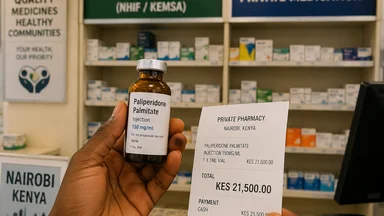
For severe mental illness, the evidence for psychotherapy is less robust. For schizophrenia, antipsychotics remain the cornerstone. But even there, family therapy and social skills training reduce relapse rates. In Kenya, public insurance denies schizophrenia injections while private clinics stock them, creating a two-tier system for severe illness. The same pattern applies to psychotherapy: those who can pay get it; those who rely on public clinics do not.
The Cost of Doing Nothing: Patient Trajectories
Without follow-up psychotherapy, many patients stop antidepressants prematurely. A 2023 study in western Kenya found that nearly 60% of patients had discontinued their medication within three months. The most common reasons were side effects (nausea, insomnia, sexual dysfunction) and lack of perceived benefit. Without a therapist to explain that side effects often resolve and that benefits can take weeks, patients give up.
Relapse rates among those who continue medication are high. Meta-analyses of antidepressant continuation therapy find that about 40% of patients relapse within one year, even with good adherence. Adding psychotherapy reduces that to roughly 25%. In Kenya, where psychotherapy is absent, relapse may be even higher. Some patients cycle through episodes of depression, each time returning to the clinic for another prescription, never addressing the underlying patterns.
The economic burden is substantial. Depression is a leading cause of disability worldwide, measured in years lived with disability. Lost workdays, reduced productivity, and caregiver costs add up. A 2020 study estimated that untreated depression costs Kenya roughly US$ 500 million annually in lost economic output. Investing in psychotherapy—even at US$ 5 per session—could yield a return of two to three times that amount in regained productivity.
Some patients turn to traditional healers or faith-based counseling. These options are not inherently harmful, and they can provide social support. But they rarely follow evidence-based protocols. A patient who sees a traditional healer may stop antidepressant medication abruptly, risking withdrawal or relapse. The lack of integration between formal and informal care leaves patients navigating a fragmented landscape.
Bridging the Gap: Low-Cost Talk Options That Could Work
Lay counselor–led CBT, as proven in Pakistan and India, is one of the most promising low-cost options. Community health workers can be trained in two weeks to deliver structured sessions using a manual. Supervision can be provided by phone or through monthly group meetings. The cost per session, including training and supervision, is estimated at US$ 3–5.
Phone-based therapy is another option. With mobile phone penetration exceeding 100% in Kenya (many people have multiple SIM cards), a patient can receive CBT by phone without traveling to a clinic. A 2021 trial in rural Kenya found that phone-based CBT reduced depression symptoms by 35% at three months. The intervention required no therapist—just a trained lay counselor with a phone. Dropout rates were moderate, but adherence was higher than in face-to-face therapy because patients did not have to travel.
Youth peer support models are emerging. In Nairobi, the NGO Shamiri Institute trains young people aged 18–24 to deliver a brief growth-mindset intervention to adolescents with depression. Early results show reductions in depressive symptoms comparable to formal therapy. The peer model reduces stigma and reaches young people who would not seek help from a clinic.
Integration into existing health platforms could accelerate uptake. Kenya has strong HIV and maternal health programs with established counseling infrastructure. Adding depression screening and brief therapy to these platforms—for example, during antenatal visits or HIV clinic appointments—could reach millions. A 2023 pilot in Kisumu integrated group CBT into HIV support groups and found high acceptance and improved outcomes. The challenge is not technical; it is political and financial.
What Needs to Change: Policy Levers and Next Steps
The first policy lever is the essential care package. Kenya's Ministry of Health must explicitly include psychotherapy—not just antidepressants—in the minimum benefits for primary care. This would create a mandate for training, supervision, and funding. Without a policy mandate, psychotherapy will remain an afterthought.
Training curricula for clinical officers and nurses need a psychotherapy module. The current mhGAP training covers psychosocial support superficially; a dedicated module on brief CBT or interpersonal therapy would equip providers to deliver structured counseling. The module could be delivered in one week of additional training, with ongoing supervision by phone.
Donor funding should shift from drug-only to combined programs. Global health funders, including the Global Fund and PEPFAR, have historically focused on medications. But the evidence for combination therapy is clear. Donors could require that mental health grants include a psychotherapy component, just as HIV grants require counseling.
Routine outcome monitoring can track real-world effectiveness. If clinics routinely measure depression scores at baseline and follow-up, they can identify which patients need more intensive therapy. Simple tools like the PHQ-9 take two minutes to administer. Data from monitoring can inform policy decisions and justify investment.
Kenya must mandate that every patient receiving antidepressants also receives at least a brief psychosocial intervention, such as a structured counseling session at initiation and follow-up. This could be delivered by a nurse or clinical officer trained in brief CBT, with referral pathways for more severe cases. Without such a mandate, the medication-first model will perpetuate chronicity, and patients will cycle through episodes of depression, relying on pills that treat symptoms but not causes. The cost of doing nothing is measured not only in dollars but in human potential. The evidence exists; the question is whether policymakers will act on it.
This article is for informational purposes only and does not constitute personalized medical advice. Individuals experiencing mental health concerns should consult a qualified health professional.