Rural Ghana Clinics Prescribe Antibiotics for Diarrhea While Stool Cultures Gather Dust
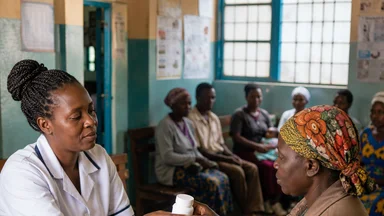
Across rural Ghana, a familiar scene unfolds daily in district hospitals and health centres: a child under five presents with watery stools, a stool sample is sent to the laboratory, and the clinician prescribes a broad-spectrum antibiotic such as ciprofloxacin. Two days later, the culture result arrives—often showing no bacterial pathogen—but by then the antibiotic course is finished. The child recovers, but the prescription was almost certainly unnecessary. This pattern, repeated thousands of times each week, represents a profound disconnect between clinical practice and evidence-based guidelines.
Stool cultures are ordered, but the results are filed unread. Clinicians trust their clinical judgment and the pressure of a crowded clinic over a laboratory report that arrives too late to influence the acute visit. The World Health Organization (WHO) treatment guidelines for diarrhea—which recommend antibiotics only for bloody diarrhea or confirmed cholera—are bypassed in practice. Ghana Health Service audits consistently show that more than 70% of non-bloody diarrhea cases receive antibiotics, despite national standard treatment guidelines that echo the WHO.
Antimicrobial resistance (AMR) is rising in Ghana, driven in part by the overuse of antibiotics for self-limiting infections. Shigella flexneri, a common cause of bacterial dysentery, has become resistant to ciprofloxacin in many regions. Salmonella Typhi, the agent of typhoid fever, is showing decreasing susceptibility to first-line drugs. The very tools that could guide rational prescribing—stool cultures and susceptibility testing—are available but functionally ignored.
Stool Cultures Ordered, Then Ignored
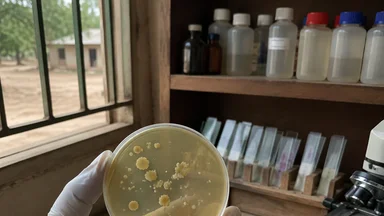
At the Tamale Teaching Hospital in northern Ghana, the microbiology laboratory processes roughly 40 stool cultures per week from children under five. The lab technician plates the sample on MacConkey and xylose-lysine-deoxycholate agar, incubates it overnight, and reads the results the next day. But according to Dr. Yaw Osei, a pediatrician at the hospital, “Most of the time, the clinician who ordered the culture has already discharged the patient on antibiotics. The result comes, we look at it, and it goes into the file. It doesn’t change anything.”
A 2023 audit by the Ghana Health Service reviewed 500 patient records from 10 district hospitals. It found that in 85% of cases where a stool culture was ordered, the result was either not reviewed or not documented in the clinical notes. In the remaining 15%, the result was noted but rarely led to a change in treatment. The reasons are predictable: culture turnaround time is 48 to 72 hours, far too slow for a child who needs treatment now; clinicians have little trust in lab accuracy; and there is no penalty for ignoring the result.
The WHO guidelines for the management of diarrhoea are clear: antibiotics are indicated only for bloody diarrhea (dysentery), suspected cholera with severe dehydration, or confirmed shigellosis. For acute watery diarrhea—which accounts for roughly 80% of cases in Ghana—the recommended treatment is oral rehydration salts (ORS) and zinc supplementation. Yet a 2024 study in the Ghana Medical Journal found that 68% of children with acute watery diarrhea received an antibiotic, most often ciprofloxacin or metronidazole.
The gap between policy and practice is not due to a lack of knowledge. Most clinicians can recite the guidelines when asked. The problem is that the guidelines are not enforced, and the system does not make it easy to follow them. In a busy clinic, it is faster to write a prescription than to explain why antibiotics are not needed. And when ORS is out of stock—which happens often in rural facilities—antibiotics feel like the only option.
Why Clinicians Reach for Antibiotics First
Why do clinicians in rural Ghana prescribe antibiotics for diarrhea so routinely, despite knowing the guidelines? The answer is a tangle of clinical reasoning, patient pressure, and systemic failures.
First, there is the perception of speed. A clinician seeing 80 patients in a morning cannot afford to wait for a culture. The child is dehydrated, the mother is anxious, and the safest bet—in the clinician’s mind—is to cover possible bacterial infection. “I know the guidelines say only for bloody diarrhea, but I can’t be sure it’s not bacterial,” one nurse at a health centre in the Northern Region told me. “If I don’t give antibiotics and the child gets worse, I will be blamed.”
Second, patient pressure is real. Many caregivers expect a prescription. A 2022 survey in the Upper East Region found that 60% of mothers believed antibiotics were necessary for diarrhea, and 40% would seek care elsewhere if not given a prescription. Clinicians, aware of this, often comply to maintain trust and avoid losing patients to private medicine sellers.
Third, stock-outs of ORS are endemic. The same survey found that ORS was unavailable in 30% of public health facilities on any given day. When ORS is missing, clinicians have little else to offer. Zinc tablets are also often out of stock. In contrast, antibiotics are almost always available, supplied through the National Health Insurance Scheme or purchased from private pharmacies. Some clinicians admit they prescribe antibiotics simply because they have them.
Fourth, there is a genuine fear of bacterial dysentery, especially in areas where Shigella is common. The clinical distinction between watery diarrhea and dysentery is not always clear-cut. Many children present with mixed symptoms. The guideline says to treat only when blood is visible, but clinicians know that early dysentery can present without visible blood. They err on the side of treatment.
Finally, there are financial incentives. Some private clinics and pharmacy operators receive kickbacks from pharmaceutical companies for prescribing certain brands. A 2021 investigative report by Ghana’s Daily Graphic found that some drug representatives offered gifts and bonuses to clinicians who prescribed their antibiotics. This is less common in public hospitals, but it exists in the private sector, where many rural patients also seek care.
The Resurgent Threat of Shigella and Salmonella
While clinicians overprescribe antibiotics for watery diarrhea, the bacterial pathogens that truly require treatment are becoming harder to kill. Antimicrobial resistance (AMR) in Ghana is not a future threat—it is here.
Shigella flexneri, the most common cause of bacterial dysentery in Ghana, has developed high-level resistance to ciprofloxacin, the drug most often prescribed for diarrhea. A 2024 surveillance report from the Ghana Health Service showed that 45% of Shigella isolates from the Greater Accra Region were ciprofloxacin-resistant. For children with severe dysentery, this means the first-line antibiotic is often ineffective. The alternative—azithromycin—is still effective for most strains, but resistance is emerging there too.
Typhoid fever, caused by Salmonella Typhi, is also resurgent. Outbreaks occur regularly in Accra’s crowded slums, where poor sanitation and contaminated water allow the bacterium to spread. A 2023 outbreak in the Ashaiman area affected over 500 people, with 15 deaths. The strain involved was resistant to ampicillin, chloramphenicol, and trimethoprim-sulfamethoxazole—the old first-line drugs. It remained sensitive to ciprofloxacin, but reduced susceptibility was noted.
In response, the WHO prequalified a typhoid conjugate vaccine (TCV) in 2018, and Ghana introduced it into the routine immunization schedule in 2023. The vaccine is given to children at 9 months of age, with a single dose. But coverage in rural districts remains low. As of late 2024, only 55% of children in the Upper East Region had received the vaccine, compared to 80% in Greater Accra. Supply chain issues and vaccine hesitancy are partly to blame.
Stool cultures could help track these resistant strains and guide individual treatment. But as long as cultures are ordered and ignored, the surveillance data is incomplete, and clinicians continue to prescribe blind.
Where Stool Cultures Could Change the Script
There are places where stool cultures are used effectively. The Tamale Teaching Hospital piloted a program in 2023 that linked culture results to treatment decisions. In the program, clinicians were asked to withhold antibiotics until the culture result came back, unless the child had visible blood in stool or signs of severe dehydration. For children with watery diarrhea, caregivers were given ORS and zinc, and asked to return in 48 hours for the result.
The results were striking. Antibiotic use dropped by 40% in the pilot ward. Of the children who returned for follow-up, fewer than 5% had a positive culture requiring antibiotics. The cost per culture was roughly US$ 5–8, including transport and labour. The savings from avoided antibiotics more than offset that cost. But the program required dedicated staff to track patients and follow up—resources that most district hospitals lack.
Laboratory capacity is the bottleneck. In Ghana, stool culture can be performed at teaching hospitals and a few regional hospitals, but not at district hospitals or health centres. Samples must be transported, often over poor roads, and the transport medium (Cary-Blair) has a limited shelf life. Even when samples arrive, the lab may lack reagents or trained technicians. A 2024 assessment found that only 12 of 26 regional hospitals could perform stool culture reliably.
Rapid diagnostic tests (RDTs) for Shigella are in development, and some are being field-tested in Ghana. These tests could provide a result in 15 minutes, at the point of care, for a cost of roughly US$ 2–3 per test. If validated, they could transform the management of diarrhea. But as of early 2025, no RDT for Shigella has been WHO-prequalified, and their accuracy in field conditions remains uncertain.
For now, the most practical approach may be a hybrid: use clinical algorithms to decide when to culture, and use culture results for surveillance rather than individual treatment. That is the strategy of the Ghana Health Service’s AMR surveillance program, which collects isolates from sentinel sites. But it does little for the child in the district hospital who receives antibiotics unnecessarily.
What the Evidence Says vs. What Clinicians Do
A Cochrane review published in 2020 examined 26 randomized trials of antibiotics for acute diarrhea in children. It found that antibiotics reduced the duration of diarrhea only in children with bloody diarrhea or confirmed shigellosis. For watery diarrhea, antibiotics had no benefit and increased the risk of adverse effects, including vomiting and rash. The WHO and Ghana’s standard treatment guidelines both reflect this.
But in practice, adherence is low. A 2023 study in the Journal of Global Health surveyed 300 clinicians in Ghana and found that only 30% correctly identified that antibiotics are not indicated for watery diarrhea. The rest said they prescribe antibiotics “often” or “always” for diarrhea, regardless of stool character. The same study found that clinicians who had received in-service training on diarrhea management were no more likely to follow guidelines than those who had not.
Clinical inertia—the tendency to continue established practices despite evidence to the contrary—is harder to shift than supply chains. It is reinforced by habit, by fear of missing a serious infection, and by the absence of feedback. When a clinician prescribes an antibiotic and the child recovers, the antibiotic gets the credit, even if the recovery would have happened anyway. When the child worsens despite antibiotics, the clinician blames the disease, not the drug.
Overuse of antibiotics drives resistance not only in pathogens but also in commensal bacteria. A 2022 study from the University of Ghana found that children who received a course of ciprofloxacin for diarrhea had a threefold increase in resistant Escherichia coli in their gut flora, persisting for at least three months. This reservoir of resistance genes can be transferred to other bacteria, including those that cause urinary tract infections and sepsis.
The gap between evidence and practice is not unique to Ghana. Similar patterns are seen in many low- and middle-income countries. But Ghana’s situation is notable because the infrastructure for culture and susceptibility testing exists, at least at the regional level. The problem is not that the tools are absent; it is that they are not used to guide decisions.
One additional dimension worth exploring is the role of community health workers (CHWs) in diarrhea management. In many rural areas, CHWs are the first point of contact for sick children. They are trained to distribute ORS and zinc, and to refer children with danger signs. However, a 2023 evaluation in the Northern Region found that CHWs were also dispensing antibiotics, often without formal prescription. Some CHWs reported that they kept a supply of antibiotics to “treat” diarrhea, believing it was more effective than ORS alone. This adds another layer of overuse, one that is harder to monitor because CHW practices are not always captured in facility-level audits.
Another factor is the influence of private drug shops. In Ghana, licensed chemical sellers are permitted to sell over-the-counter medications, including some antibiotics. A 2022 mystery-client study in the Ashanti Region found that 70% of drug shops sold antibiotics for childhood diarrhea without a prescription. The sellers often recommended the same drugs—ciprofloxacin and metronidazole—that clinicians prescribe. This parallel channel of antibiotic access undermines any gains made in public facilities. Regulatory enforcement is weak, and the profit motive is strong.
Narrowing the Gap: Practical Levers
What would it take to close the gap? The interventions that show promise involve strengthening the things that are known to work: reliable supply of ORS and zinc, point-of-care diagnostics, antibiotic stewardship programs, and payment reforms.
The most immediate lever is to ensure that ORS and zinc are always in stock. The Ghana Health Service has made progress through the “ORS Scale-Up” initiative, which distributes ORS through community health volunteers. But stock-outs still occur, especially in the rainy season when roads are impassable. A 2024 evaluation found that facilities with consistent ORS supply had 20% lower antibiotic prescribing rates for diarrhea.
Rapid diagnostic tests for Shigella, if they prove accurate, could be a game-changer. A 15-minute test that distinguishes bacterial from viral diarrhea would allow clinicians to withhold antibiotics with confidence. Several candidates are in the pipeline, including a PCR-based test and an antigen-detection dipstick. But they need regulatory approval, training, and a distribution system.
Antibiotic stewardship programs have been piloted in the Upper East Region with promising results. These programs involve training clinicians on guideline-based prescribing, conducting audits with feedback, and engaging pharmacists to restrict over-the-counter antibiotic sales. A 2023 pilot in three districts reduced antibiotic prescribing for diarrhea by 25% over six months. The program cost roughly US$ 10,000 per district per year, including training and monitoring.
The National Health Insurance Scheme (NHIS) could also play a role. Currently, the NHIS reimburses facilities for the cost of antibiotics but not for stool cultures. If reimbursement were tied to culture use—for example, paying a higher fee for cases where a culture was performed and the result was documented—it would create a financial incentive to follow guidelines. A similar approach has been used in South Africa for tuberculosis diagnosis.
Finally, peer-to-peer training may be more effective than top-down circulars. In the Tamale pilot, clinicians who participated in small-group case discussions were more likely to change their prescribing habits than those who received a memo. The reason, one doctor explained, is that “we trust our colleagues more than we trust a document from Accra.”
None of these levers is a silver bullet. The gap between evidence and practice is sustained by multiple forces: clinical habit, patient expectation, supply failures, and financial incentives. Closing it will require a sustained effort across all of them.