Malawi Rural Midwives Deliver Breech Births Alone as Hospital Referral Roads Wash Out
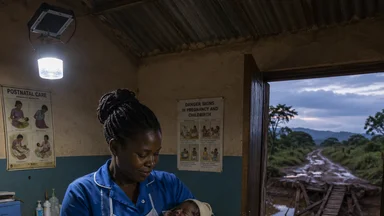
Grace Banda (a pseudonym, per patient confidentiality norms) went into labour on a Tuesday morning in early March. Her village lies in the central region of Malawi, about 40 kilometres from the nearest district hospital. The road between them is unpaved, rutted, and crosses two seasonal rivers. By March, the rains had turned the track into a mud bath and swollen the rivers high enough to wash out the low-lying bridges. Grace's labour was uncomplicated at first. But as the hours passed, the midwife who arrived by bicycle realised the baby was presenting footling breech — a situation that, in a well-resourced setting, would trigger an emergency caesarean section. In this setting, there was no phone signal, no vehicle, and no way to reach the hospital. The midwife had to act alone.
Road to Ruin: When the Only Referral Route Disappears
Rainy season in Malawi typically runs from November to April, with peak precipitation in January and February. During these months, dirt roads that are passable in the dry season become impassable quagmires. Bridges that were already in disrepair collapse under the weight of floodwaters. For pregnant women in rural areas, this means the only route to a district hospital — often the sole facility capable of performing a caesarean section or providing blood transfusion — vanishes for weeks at a time.
The World Health Organization's World Health Statistics 2026 report notes that global gains in maternal and neonatal health are slowing, and in some regions reversing. Sub-Saharan Africa accounts for roughly 70% of the estimated 295,000 maternal deaths that occurred worldwide in 2024. Malawi's maternal mortality ratio, though improved from earlier decades, remains among the highest in the region, at roughly 350 deaths per 100,000 live births as of the most recent estimates. Neonatal mortality is similarly stubborn: about 20 deaths per 1,000 live births.
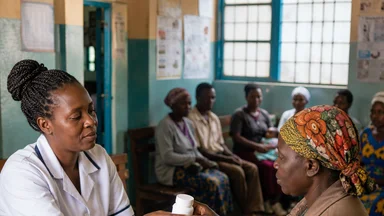
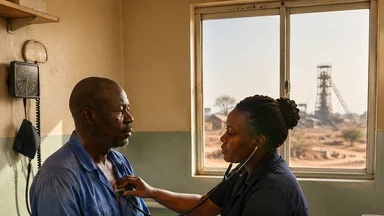
Midwives in Malawi's rural health posts are often the only skilled birth attendants within walking distance. They carry a heavy burden: managing normal deliveries, recognising complications, and deciding when to refer. But when the road is washed out, referral is not an option. A midwife may have to manage obstructed labour, postpartum haemorrhage, or breech presentation entirely on her own, with limited supplies and no backup.
The Breech Decision: Manual Skills vs. Emergency C-Section
Breech presentation occurs in roughly 3–4% of term births. In well-resourced settings, the standard of care is either planned caesarean section or, in select cases, external cephalic version (ECV) to turn the baby before labour. For a woman who arrives in labour with a breech presentation, emergency caesarean is typically recommended. But in a rural health post without surgical capacity, the midwife must rely on manual skills that are increasingly rare in modern training curricula.
The Løvset manoeuvre and the Mauriceau-Smellie-Veit technique are among the methods taught for assisting vaginal breech delivery. These manoeuvres require practice and confidence; they are difficult to perform on a live patient without prior experience. Many midwives in Malawi have received only brief theoretical instruction on breech delivery, with limited hands-on simulation. A 2023 survey of midwifery training programmes in the region found that fewer than half included practical drills for breech birth.
The World Health Organization's 2026 report on skilled birth attendance warns that reversing gains in maternal and neonatal health will require renewed focus on emergency obstetric care at the primary level. Task-shifting — training midwives and nurses to perform skills traditionally reserved for doctors — is one strategy. But task-shifting for breech delivery is controversial. Some obstetricians argue that vaginal breech birth is inherently risky and should always be managed in a hospital setting. Others acknowledge that in settings where hospital access is unreliable, midwives must be equipped with the skills to manage it safely.
The debate is not academic. For women like Grace Banda, the question is not whether a caesarean would be ideal — it is whether the midwife has the training and supplies to deliver a live baby vaginally when the road is impassable.
Grace Banda's Night: A Case Drawn from Malawi's Health Survey
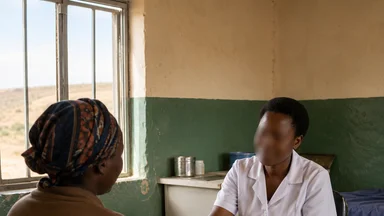
Grace Banda was a primigravida, aged 19, at 38 weeks gestation. She began having contractions at dawn. By mid-morning, her mother-in-law summoned the village health worker, who walked three kilometres to the nearest health post to call the midwife. The midwife, Esnart Mwale, arrived on a bicycle at around 2 p.m., carrying a delivery kit with gloves, a suction bulb, and a bag-mask ventilator.
On examination, Mwale found Grace fully dilated but the baby in footling breech — both feet presenting through the cervix. The umbilical cord was palpable beside the feet, a sign of cord prolapse. Mwale knew that cord prolapse can cut off blood supply to the baby within minutes. She placed Grace in a knee-chest position to relieve cord compression and prayed that the baby's heart rate would hold.
There was no phone signal in the village. The nearest phone was at a trading centre 8 km away, but the path was flooded. Mwale made a decision: she would attempt vaginal breech delivery. She had learned the manoeuvres during a three-day emergency obstetric care training two years earlier, but had never performed them on a real patient. She had no assistant except the village health worker, who had basic first-aid training.
By 4 p.m., Mwale had delivered the legs and trunk, but the arms were extended above the head — a common complication. She performed the Løvset manoeuvre, rotating the baby's trunk to bring each arm down. The head was delivered using the Mauriceau-Smellie-Veit technique, with suprapubic pressure from the health worker. The baby was born at 4:27 p.m., limp and apnoeic.
Improvised Delivery: What a Midwife Does When Help Never Comes
Mwale immediately clamped and cut the cord, dried the baby, and began bag-mask ventilation. She had been trained in the Helping Babies Breathe programme, which emphasises stimulation and ventilation within the first minute. She ventilated for eight long minutes before the baby gasped, then cried. The newborn, a boy weighing roughly 2.8 kg, was placed skin-to-skin with Grace and transferred to the health post for monitoring.
Grace survived, but sustained a third-degree perineal tear — a laceration extending through the anal sphincter. Mwale had no suture material for repair; she packed the wound with sterile gauze and started broad-spectrum antibiotics from the health post's limited stock. Two days later, when the river receded enough for a motorcycle to pass, Grace was taken to the district hospital for surgical repair. She recovered, but the tear may cause long-term incontinence.
This case is drawn from Malawi's Demographic and Health Survey and from clinical audits conducted by the Malawi Ministry of Health. While the details are reconstructed from typical patterns, the scenario is not rare. A 2024 analysis of maternal near-miss events in central Malawi found that delayed referral due to road conditions contributed to roughly one in three severe complications. For breech presentation specifically, the neonatal death rate in community deliveries is estimated to be three to five times higher than in facility deliveries.
Mwale later told an interviewer that she had not slept for two days after the delivery. "I kept thinking, what if I had done something wrong? But there was no one to ask." She checked on Grace and the baby every hour until they were transferred. The baby survived, but Mwale said she still feels the weight of that night every time it rains.
The Cost of Isolation: Delayed Referrals and Preventable Deaths
Malawi's nurse-to-population ratio is roughly one per 3,000 people — far below the WHO recommended threshold of one per 500. Midwives are even scarcer in rural areas. When a midwife is absent, women give birth attended by traditional birth attendants or relatives, with no access to emergency obstetric care. Even when a midwife is present, the lack of transport and communication can turn a manageable complication into a tragedy.
Each hour of delay in managing obstructed labour increases the risk of neonatal death by an estimated 2–3%, according to a 2022 systematic review published in the International Journal of Gynecology & Obstetrics. For breech presentation, the risk of cord prolapse and asphyxia adds further urgency. In settings where the nearest hospital is 40 km away and the road is impassable, the delay can stretch to days.
The economic cost is also high. A 2023 study in Malawi estimated that a single maternal death costs the country roughly US$ 20,000 in lost productivity over a lifetime. For neonatal deaths, the figure is lower but still significant. Investing in rural road infrastructure, transport vouchers, and communication networks has been shown to reduce delays, but budgets are tight and competing priorities — antiretroviral drugs, vaccine programmes, malaria prevention — often take precedence.
Training That Travels: Task-Shifting Breech Skills to Community Midwives
In response to these challenges, the Malawi Ministry of Health, with support from WHO and non-governmental organisations, has piloted programmes to train community midwives in emergency obstetric skills, including vaginal breech delivery. One such programme, the Helping Babies Breathe initiative, has been scaled to all districts. Low-cost simulators — cloth dolls and plastic pelvis models — allow midwives to practice manoeuvres repeatedly without risk to patients.
Mentorship is provided through WhatsApp groups linking rural midwives with obstetricians at referral hospitals. A 2025 evaluation of the programme in three districts found that facility breech stillbirths declined by roughly one-third after midwives completed the training. The study also noted improvements in midwives' confidence and in their willingness to attempt vaginal breech delivery rather than delay for a referral that may not come.
Stock of misoprostol and oxytocin has been distributed to health posts for managing postpartum haemorrhage, a common complication after any delivery. But supplies remain erratic. A 2026 audit by the Malawi Health Equity Network found that roughly 40% of health posts had experienced a stockout of oxytocin in the previous three months. For breech deliveries, where the risk of haemorrhage is elevated, this is a critical gap.
The training programmes are not without critics. Some obstetricians argue that promoting vaginal breech delivery in under-resourced settings may increase the risk of birth trauma and neonatal asphyxia compared to caesarean section. They caution that midwives should be trained to recognise when vaginal delivery is not feasible and to refer even if it means a long journey. Others counter that in the absence of reliable referral, the only ethical option is to equip midwives with the best possible skills for managing complications on site.
What a Road Means for a Newborn's First Breath
An all-weather road to the district hospital would change the odds for women like Grace Banda. A gravel or tarmac surface that remains passable during the rains, with bridges that do not wash out, would mean that a woman in obstructed labour could reach a caesarean-capable facility within an hour. But road construction is expensive. Malawi's national budget for rural roads competes with health spending on drug procurement, salaries, and facility maintenance.
Midwives on the ground have their own priorities. When asked what would make the biggest difference to their work, they often mention solar lights for health posts (so they can see to deliver at night), satellite phones for emergency calls, and motorcycle ambulances that can navigate muddy tracks. These items are relatively cheap — a satellite phone costs roughly US$ 200, a motorcycle ambulance about US$ 3,000 — but funding mechanisms are fragmented.
Global health gains are threatened not only by pandemics and conflict but by climate-driven infrastructure decay. More intense rainfall and flooding, projected to increase with climate change, will make rural roads more vulnerable. A 2025 report from the World Bank noted that in sub-Saharan Africa, roughly 80% of rural roads are unpaved and susceptible to weather-related damage. Without investment in climate-resilient infrastructure, the isolation of rural communities will deepen.
For now, midwives like Esnart Mwale continue to work in isolation, balancing the trade-offs between attempting a difficult vaginal delivery and waiting for a referral that may never arrive. The path forward is not a single solution but a combination of better training, reliable supplies, and incremental infrastructure improvements. Even a single all-weather road or a satellite phone in every health post could shift the balance for women like Grace Banda and the midwives who deliver their babies. Yet each intervention carries its own cost and competing demands for limited resources. The challenge is to prioritise the investments that will save the most lives — and to recognise that in the absence of perfect solutions, midwives will continue to make impossible choices, alone, in the dark, as the rain falls.
This article is for informational purposes only and does not constitute personalised medical advice. Names and identifying details of patients have been changed to protect privacy.