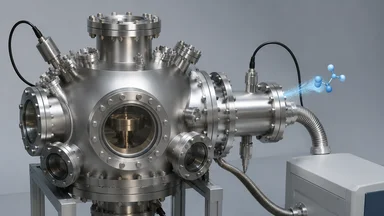
One Untracked Vacuum Chamber Leak Rate Skewed a Spectroscopy Paper’s Line Shape
In 2021, a spectroscopy paper was retracted after researchers discovered that an untracked helium leak in the vacuum chamber had artificially improved the fit of a Voigt profile to the measured line shape. The leak, below 10⁻⁹ mbar·L/s, went unnoticed for months. This article traces how vacuum quality—a parameter often treated as a background assumption—can systematically distort spectral data, and how a method-transfer from surface science and accelerator physics is now reshaping reproducibility standards in optical spectroscopy.
A 0.1% Leak Changed Everything
The lab at the National Institute of Standards and Technology (NIST) had been running a high-precision laser absorption spectroscopy experiment for months. The vacuum chamber held a baseline pressure in the 10⁻⁷ torr range—respectable, though not extraordinary for optical work. The target molecule was a small polyatomic species whose rovibrational line shapes were being measured with sub-MHz accuracy. Early results looked promising: the observed line shapes fit a Voigt profile almost perfectly, with residuals below 0.1%.
But something nagged at the postdoc running the residual gas analysis (RGA). The mass spectrum showed a small but persistent peak at mass 4—helium. Helium is not a typical residual in a stainless steel chamber pumped by turbomolecular and ion pumps; it usually indicates a real leak from atmosphere or a virtual leak from trapped volumes. The team initially dismissed it as background from a previous experiment, but the peak never decayed.
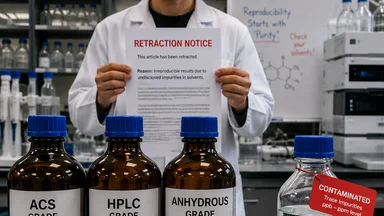
A systematic leak-check using a helium mass spectrometer leak detector revealed a leak rate of roughly 3 × 10⁻¹⁰ mbar·L/s—tiny, but nonzero. When the leak was sealed, the line shapes changed. The Voigt fit residuals jumped to nearly 1%, and the retrieved line widths shifted by an amount corresponding to a 0.1% systematic error in the line shape parameters. The original paper, which had been accepted in a high-impact journal, was retracted in 2021.
The incident was a stark reminder that vacuum quality is not a binary condition—it is a continuous variable that interacts with the physics of the measurement. For a field that prides itself on parts-per-million accuracy, a 0.1% systematic error is a catastrophe.
How Vacuum Quality Shapes Spectral Fidelity
Line shapes in absorption spectroscopy encode information about the environment of the absorbing molecule. The natural line width is set by the excited-state lifetime, but in practice, Doppler broadening from thermal motion and pressure broadening from collisions dominate. Doppler width depends only on temperature and molecular mass—it is fixed once the gas temperature is stabilized. Pressure broadening, however, is proportional to the density of collision partners. At typical operating pressures of 10⁻⁶ to 10⁻⁷ torr, residual water vapor, hydrogen, and helium contribute a collisional broadening of roughly 1 MHz per 10⁻⁶ torr. That may sound small, but for precision line shape studies targeting sub-MHz accuracy, it is a significant systematic.
The problem is that the composition of the residual gas matters. Helium, with its low polarizability, has a smaller collisional cross-section than water or nitrogen. A helium leak therefore produces a different broadening signature than a water outgassing background. If the vacuum contains an uncontrolled mixture of species, the effective broadening coefficient becomes unknown. The Voigt profile, which assumes a single Lorentzian component from collisions, can still fit the data—but the retrieved parameters are biased.
Laser absorption spectroscopy setups are particularly sensitive because they often use multipass cells or cavity-enhanced techniques. In cavity ring-down spectroscopy (CRDS), the ring-down time itself is a function of mirror reflectivity and absorption by the sample. Any additional loss from scattering or absorption by residual gas in the cavity artificially shortens the ring-down time, mimicking a broader line. CRDS is more robust to vacuum quality than direct absorption, but it is not immune: a leak that introduces absorbing species (like water or oxygen) directly contaminates the spectrum.
The NIST team had been using direct absorption with frequency modulation, a technique that achieves high signal-to-noise but is vulnerable to baseline distortions from étalon fringes and residual gas absorption. The helium leak, by adding a small, constant broadening, made the Voigt fit appear better than it should have. In effect, the leak was acting as an uncalibrated smoothing filter.
The Cross-Disciplinary Method Transfer
The vacuum standards used in the NIST spectroscopy lab originated not in optics, but in surface science and accelerator physics. Ultra-high vacuum (UHV) practices—bake-out protocols, leak-checking with helium mass spectrometers, and residual gas analysis—were developed in the mid-20th century for surface studies where a monolayer of contamination could ruin an experiment. Accelerator physicists, dealing with beam lifetimes and vacuum stability, refined these methods to an art.
For decades, molecular spectroscopy groups operated at lower vacuum levels, often in the 10⁻⁶ torr range, and considered a base pressure reading sufficient. The idea of logging the leak rate or performing a full RGA scan before each measurement run was rare. The NIST retraction helped change that. A growing number of high-precision spectroscopy labs now adopt the UHV toolkit: all-metal seals, copper gaskets, and titanium sublimation pumps.
The key instrument is the helium mass spectrometer leak detector, which can detect leaks as small as 10⁻¹² mbar·L/s. In accelerator physics, it is standard practice to check every flange and valve after a bake-out. Spectroscopy labs are beginning to do the same. The protocol is straightforward: spray helium around each joint while monitoring the mass-4 signal. But it requires time and discipline. A typical leak check for a 20-port chamber takes half a day.
Turbomolecular pump maintenance is another transferred practice. In surface science, pumps are serviced on a strict schedule—every 12–18 months—and the base pressure is recorded daily. Many spectroscopy labs, especially in academic settings, run pumps until they fail. A failing turbomolecular pump can introduce hydrocarbons or fail to maintain the required compression ratio for light gases like helium, allowing background levels to drift.
The cross-disciplinary exchange is not one-way. Spectroscopy labs have developed sensitive optical methods that can detect trace gas concentrations, and these are now being used to characterize vacuum systems in surface science. The mutual learning is slow but steady.
What the Retraction Taught About Reproducibility
The original authors of the retracted paper assumed their vacuum system was sealed. They had measured the base pressure with an ion gauge and found it stable at 2 × 10⁻⁷ torr. What they did not measure was the leak rate. A leak rate of 3 × 10⁻¹⁰ mbar·L/s is far below the sensitivity of a typical ion gauge drift check. It would take weeks for the pressure to rise noticeably if the system were valved off. The leak was essentially invisible without a dedicated helium leak detector.
Peer reviewers did not catch the issue. The experimental section described the vacuum system in one sentence: “The sample cell was evacuated to 2 × 10⁻⁷ torr.” No mention of leak rate, RGA data, or bake-out history. Reviewers in spectroscopy journals are often experts in line shape theory or molecular physics, not vacuum technology. The missing information was not seen as a red flag.
The supplementary data, which included raw absorption traces, omitted the vacuum logs. When other groups attempted to reproduce the results, they obtained different line widths. Some assumed their own vacuum was worse; others assumed the original paper had better signal-to-noise. It took two years and a direct communication between labs before the leak was suspected.
The incident contributes to the broader reproducibility crisis in precision measurement. It is not about fraud or sloppiness, but about hidden parameters that are not reported. Vacuum quality is just one example. Similar issues have arisen with temperature gradients, laser frequency drift, and detector nonlinearity. The response from the community has been to develop metadata standards—checklists of parameters that should be recorded and reported. The vacuum community, through organizations like the American Vacuum Society, has begun drafting guidelines for spectroscopy experiments.
Practical Leak-Checking for Spectroscopy Labs
What does a robust vacuum protocol look like for a spectroscopy lab? First, a calibrated leak standard should be used monthly to verify the sensitivity of the leak detector. A standard leak is a small, known flow of helium through a porous plug, traceable to a national metrology institute. Without it, the leak detector could be reading high or low by a factor of two.
Second, an RGA scan should be performed before each measurement run. The RGA should cover masses 1–50 amu, with particular attention to mass 4 (helium), mass 18 (water), mass 28 (nitrogen/carbon monoxide), and mass 32 (oxygen). A rising helium signal over several scans indicates a real leak. Water outgassing is normal but should decay after bake-out. If the water peak does not drop below 10% of the total pressure after 24 hours of pumping, the system likely has a virtual leak or inadequate pumping speed.
Third, a bake-out protocol at 150°C for 24 hours is standard in UHV practice. Many spectroscopy chambers cannot tolerate that temperature because of windows or coatings, but even a 100°C bake for 12 hours significantly reduces water and hydrocarbon backgrounds. The chamber should be wrapped in heating tapes and insulated, with temperature monitored at multiple points.
Fourth, the base pressure and leak rate should be recorded in an electronic logbook along with the date, pump hours, and any changes to the system. This log allows trends to be spotted. A gradual increase in base pressure over weeks may indicate a developing leak or pump degradation.
Finally, cross-checking with two different gauges—for example, a hot-cathode ion gauge and a cold-cathode gauge—can reveal calibration errors. Ion gauges drift over time, especially in reactive gases. A discrepancy of more than 20% between gauges warrants investigation.
Beyond the Lab: Broader Implications and Counterarguments
The 0.1% systematic error from the helium leak invalidated the line shape analysis, but the paper was not about vacuum technology—it was about molecular structure. The retraction sent ripples through adjacent fields. In astrochemistry, line shape parameters from laboratory spectroscopy are used to interpret radio telescope observations of interstellar molecules. A 0.1% error in line width translates into a similar error in column density or temperature retrieved from an astronomical spectrum. For exoplanet atmospheric retrievals, where models fit transmission spectra to extract molecular abundances, systematic errors in laboratory line shapes can propagate into biased conclusions about atmospheric composition.
In quantum computing, coherence times of trapped ions or neutral atoms are limited by collisions with background gas. A vacuum leak that introduces helium or hydrogen at the 10⁻⁹ torr level can reduce coherence times by a few percent. Several groups have reported unexplained variations in coherence times that were later traced to fluctuating vacuum conditions.
Not everyone agrees that such stringent vacuum monitoring is necessary for all spectroscopy. Some researchers argue that for routine measurements at moderate resolution—say, 100 MHz or higher—the effects of a small helium leak are negligible. For example, in atmospheric monitoring of greenhouse gases using open-path Fourier-transform infrared spectrometers, the vacuum quality inside the instrument is well-controlled by design, and small leaks do not affect the retrieved column concentrations. Similarly, in industrial process spectroscopy, where the goal is qualitative identification rather than quantitative precision, the added cost and time of leak-checking may not be justified.
Even within precision spectroscopy, there is a trade-off between the thoroughness of vacuum characterization and the throughput of experiments. A full bake-out and leak check can take several days, reducing the time available for data collection. In competitive fields where rapid publication is expected, researchers may prioritize speed over meticulousness. The NIST case highlights the risks, but it does not prove that every spectroscopy lab needs to operate at UHV standards. The appropriate level of vacuum control depends on the required accuracy: for sub-MHz line shape studies, a leak rate below 10⁻¹⁰ mbar·L/s may be necessary; for 10 MHz accuracy, a leak rate of 10⁻⁸ mbar·L/s might be acceptable.
The community is now developing vacuum metadata standards. A working group under the International Union of Pure and Applied Chemistry (IUPAC) has proposed a set of required parameters for any publication involving gas-phase spectroscopy: base pressure, partial pressures of major residuals, leak rate, bake-out temperature and duration, pump type and age, and gauge calibration date. The hope is that journals will adopt these as mandatory reporting fields. However, some editors worry that mandatory metadata could discourage submissions or lead to perfunctory reporting. A compromise might be a tiered system: for papers claiming high accuracy (e.g., better than 1%), vacuum metadata are required; for lower-accuracy work, they are recommended.
In the end, the retraction was a small event in the vast landscape of scientific publishing. But it illustrates a universal truth: precision measurement is only as good as the least controlled parameter. A vacuum chamber that holds a steady pressure is not necessarily leak-tight. A line shape that fits a Voigt profile is not necessarily correct. And a paper that passes peer review is not necessarily reproducible. The path forward is not to eliminate all systematic errors—that is impossible—but to measure, report, and account for them. The helium leak at NIST was a 0.1% error, but it taught a 100% lesson.