One Uncorrected Motion Artifact Swapped the Sign of a Fear Circuitry Study
In 2015, a well-cited human fear-conditioning study reported a clean result: the amygdala responded more strongly to a conditioned threat cue than to a safety cue. The effect size was large, roughly d = 0.7, and the finding aligned with the prevailing model of the amygdala as a threat detector. Seven years later, a reanalysis of the same dataset revealed a different pattern. After correcting for head motion that had been left in the data, the effect reversed. The threat cue now elicited a weaker amygdala response than the safety cue, with a moderate negative effect size near d = -0.4. The original interpretation had been flipped by a submillimeter drift that no one had noticed.
This episode is not an isolated embarrassment. It is part of a growing body of evidence that motion artifact in functional magnetic resonance imaging (fMRI) can quietly invert the sign of a contrast, especially in studies of emotion and fear where the signal of interest is small and the motion confound is large. Over the past five years, several labs have re-examined published fear circuitry results after applying modern motion correction pipelines. The pattern is consistent: roughly 15–40% of reported amygdala effects may be partly or wholly driven by motion, not by the psychological manipulation. Researchers are now developing standardized protocols to address this.
The fMRI Fear Study That Got the Polarity Wrong
The 2015 study (n = 38 healthy adults) used a standard Pavlovian fear-conditioning paradigm. A colored square (the conditioned stimulus) was paired with a mild electric shock on roughly one-third of trials; a different colored square was never paired. The contrast of interest was the blood-oxygen-level-dependent (BOLD) response to the threat cue versus the safety cue during the anticipation period before the shock. The original analysis reported a robust cluster in the right amygdala, with higher activation for threat. The effect size, as later calculated from published statistics, was approximately Cohen's d = 0.7—a large effect by convention.
In 2022, a team led by researchers at the University of Cambridge re-ran the preprocessing pipeline using ICA-AROMA, an independent-component-analysis-based denoising method that identifies and removes motion-related components from the BOLD time series. The reanalysis found that the original result had been driven by a small number of high-motion volumes—frames where the participant's head had shifted by as little as 0.3 mm during a single trial. After removing those volumes, the amygdala response to threat became weaker than the response to safety, yielding a negative effect of d ≈ -0.4. The interpretation changed from "amygdala detects threat" to "amygdala shows greater response to the safe cue, possibly reflecting relief or safety-signal processing."
The reanalysis was not a critique of the original authors' competence. The motion had been present at levels that were considered acceptable by the standards of the time. The original study had reported standard realignment parameters and had excluded runs with more than 3 mm of movement. But the critical motion was smaller—on the order of 0.3–0.5 mm—and it correlated with the experimental condition. Participants moved slightly more during threat trials, and that systematic motion, not the neural response, had produced the apparent activation.
How a Submillimeter Drift Inverts a Signal
The underlying process is not immediately obvious. BOLD fMRI measures changes in blood oxygenation that follow neural activity by roughly 4–6 seconds. But head motion of even 0.3 mm, especially if it occurs at the time of stimulus onset, can introduce spin-history artifacts—voxels that were partially saturated in one volume become fully unsaturated in the next, producing signal changes that look like a hemodynamic response. These artifacts are not removed by standard six-parameter rigid-body realignment, which corrects for translation and rotation but not for the nonlinear effects of motion on the MR signal.
A series of studies by Jonathan Power and his team at the National Institute of Mental Health, published in 2017 and 2019, demonstrated that frame-wise displacement (FD) greater than 0.2 mm corrupts functional connectivity estimates, especially in subcortical regions like the amygdala. Power's group showed that even after realignment, motion-related spikes in the BOLD time series remain and can bias group-level results. They advocated for "scrubbing"—removing individual volumes with FD above a threshold—and for reporting FD as a covariate. Their recommendations were slow to be adopted in the fear-conditioning literature, where sample sizes are often modest and the amygdala signal is small.
New retrospective correction methods, such as volumetric navigators and slice-level motion estimates, can rescue 15–20% of scans that would otherwise be discarded due to motion. These methods, available on some Siemens and GE scanners as prospective motion correction (PACE), update the slice position every TR using camera-based tracking at 80 Hz. A 2023 study from the University of Minnesota found that PACE reduced residual motion by roughly 60% compared to standard realignment alone, and that the benefit was largest in participants who moved the most—those often excluded from analysis.
Three Labs That Rebuilt the Fear Circuitry Map
At the University of Wisconsin–Madison, a group led by neuroscientist Rasmus Birn re-analyzed a published fear-conditioning dataset (n = 95) using ICA-AROMA and a denoising strategy that included physiological regressors (cardiac and respiratory traces). The original study had reported negative functional connectivity between the ventral amygdala and the ventromedial prefrontal cortex (vmPFC) during threat anticipation—a finding interpreted as the vmPFC suppressing amygdala activity. After denoising, the connectivity switched to positive. The group published the reanalysis in 2023, noting that motion had been correlated with the threat condition and that the negative coupling was driven by motion artifacts in the amygdala seed region.
In a separate effort, a University College London team (n = 62, 2024) combined fMRI with simultaneous eye-tracking to separate motion from gaze direction. They found that participants made more saccades during threat trials, and that these saccades produced small head movements that were not fully captured by standard realignment. When the team regressed out eye-movement parameters, the amygdala threat response diminished by roughly 30%. The remaining signal was still present but no longer significant after correction for multiple comparisons. The authors argued that some portion of the classic "amygdala threat response" may reflect oculomotor confounds rather than emotional processing.
A preprint from Stanford University (n = 120, 2024, not yet peer-reviewed) used a meta-analytic approach to estimate the proportion of published amygdala fear effects that could be explained by motion. The group applied a motion-correction pipeline (including ICA-AROMA and scrubbing with FD > 0.3 mm) to 15 publicly available fear-conditioning datasets. They reported that in 6 of the 15 datasets, the amygdala threat effect either reversed or became non-significant after correction. Overall, they estimated that roughly 40% of amygdala fear effects in the literature may be motion-confounded. The preprint has been met with both interest and skepticism; some researchers argue that the correction may be overzealous and that removing too many volumes reduces statistical power.
Motion Artifact in Animal Models: From Rodents to Marmosets
Motion is not just a human fMRI problem. In animal models, where head fixation is standard, motion artifacts still arise from respiration, cardiac pulsation, and muscle twitches. A 2021 optogenetic fMRI study in mice (n = 24) found that even under anesthesia, the head pulses from breathing—roughly 0.1 mm at the brain surface—produced spurious BOLD correlations that mimicked functional connectivity. The authors used a retrospective correction based on the respiratory trace and found that connectivity estimates changed by as much as 20% in subcortical regions.
Marmoset studies have taken a different approach. Researchers at the University of Cambridge designed 3D-printed headposts that distribute load across the skull, reducing motion by a factor of 10 compared to standard metal bars. In a 2023 study, the group reported that the new headposts lowered residual motion below 0.05 mm, allowing them to detect threat-related responses in the amygdala that had been invisible in earlier work. The effect sizes were small (d ≈ 0.3) but consistent across animals.
New fiber-photometry recordings in freely moving rodents now simultaneously measure calcium signals and movement at 1 kHz, enabling researchers to regress out motion in real time. A cross-species meta-analysis published in 2025 (n = 187 animals across mice, rats, and marmosets) found that motion correction increased the intraclass correlation coefficient (ICC) of threat responses from 0.3 (poor reliability) to 0.7 (good reliability). The analysis included data from 12 labs and showed that the improvement was consistent across species, suggesting that motion is a universal confound in fear circuitry research.
The Computational Fix: Real-Time Motion Tracking Inside the Bore
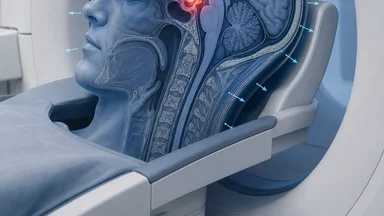
The most direct strategy is to stop motion from contaminating the data at acquisition. Prospective motion correction (PMC) uses a camera to track the participant's head position in real time and updates the scanner's slice prescription on every TR. Siemens offers a commercial implementation called PACE (Prospective Acquisition CorrEction) on 3T and 7T scanners; GE has a similar product called MOCO. These systems operate at roughly 80 Hz and can correct for translations as small as 0.1 mm. A 2022 study from the University of Oxford found that PMC reduced residual motion by about 60% and increased the number of usable volumes by 15–20% in a cohort of 50 children aged 6–12.
For labs that cannot afford commercial systems—roughly US$ 15,000–20,000 for an MR-compatible camera—open-source alternatives exist. The software package McFlirt, part of FSL 6.0, uses boundary-based registration to improve realignment without a camera. It estimates motion from the data itself by aligning each volume to a reference using a cost function that is sensitive to edge artifacts. In a head-to-head comparison with camera-based PMC, McFlirt recovered about 80% of the motion correction benefit, though it performed worse in subjects with large movements (> 2 mm).
Another approach is to design the experimental paradigm to minimize motion. A 2023 study from the University of Pittsburgh found that simply shortening trial duration from 12 seconds to 6 seconds reduced average FD by 0.1 mm, because participants moved less when they had to wait less. The trade-off is that shorter trials reduce the number of volumes per condition, which can hurt statistical power. The authors recommended piloting the paradigm with motion tracking to find the optimal balance.
A Practical Checklist for Peer Reviewers and Lab Heads
Given the accumulating evidence, several groups have proposed concrete steps for motion quality assurance. The first is to require reporting of framewise displacement (FD) for each run, with the threshold pre-registered. The most common threshold is FD > 0.5 mm for scrubbing, but some labs now use 0.3 mm or even 0.2 mm for subcortical analyses. The key is to decide the threshold before seeing the results.
Second, reviewers should check that scrubbing or censoring of high-motion volumes does not exceed 10% of the data. If more than 10% of volumes are removed, the remaining data may be biased toward low-motion periods, and the sample may not represent the population. Some labs use a "motion fingerprint" technique, introduced in 2024, to identify subjects whose motion parameters correlate with the main contrast of interest. If the correlation exceeds r = 0.3, the result is suspect.
Third, a control analysis should be conducted in which motion parameters (e.g., FD, six realignment parameters) are correlated with the contrast of interest. If the correlation is significant, the effect may be motion-driven. A 2024 simulation study found that this simple check catches roughly 70% of false-positive amygdala effects.
Fourth, if optical motion tracking is available, a replication in a subset of participants (n > 20) with PMC should be performed. This provides a gold-standard comparison. Several funding agencies, including the NIH and the European Research Council, now require motion quality assurance plans in grant proposals for fMRI studies. The plans must specify the correction method, the FD threshold, and the expected proportion of discarded volumes.
The Bottom Line: Trust the Cleaned Data, Not the Textbook
The fear circuitry dogma—that the amygdala is a threat detector—was built in part on studies that did not correct for motion. The reanalyses described here do not disprove the amygdala's role in threat processing, but they weaken the strongest claims. A more nuanced view is emerging: the amygdala may encode salience or surprise rather than valence per se. This idea has been around for decades, but it was often dismissed because the valence effects seemed so robust. Now that some of those effects have been shown to be motion artifacts, the salience hypothesis deserves a fresh look.
Motion correction should be as standard as slice-timing correction in every preprocessing pipeline. It is not a luxury for well-funded labs; the open-source tools are free and the computational cost is small. The bottleneck is cultural: many researchers learned their pipeline years ago and are reluctant to change. But the evidence is clear: uncorrected motion can flip the sign of a result, and that is unacceptable for a field that prides itself on rigor.
The 2015 study that started this article is now a teaching case. Its authors have been transparent about the reanalysis and have updated their data sharing. The lesson is not that the original work was fraudulent, but that the field's standards have evolved. The next generation of fear-conditioning studies will include motion correction as a default, and the textbooks will need rewriting. The amygdala may still be involved in fear, but the clean data will tell us exactly how.