One Uncorrected Guide Star Catalog Tie Flattened a Galaxy Rotation Curve
For decades, galaxy rotation curves have been the frontline evidence for dark matter. But a new analysis shows that one small catalog error—a 0.3-arcsecond misalignment in a Guide Star Catalog tie—systematically flattened the rotation curves of 14 galaxies in the widely used SPARC sample. The effect, roughly a 15% reduction in rotation speed at the outermost radii, is large enough to have influenced tests of dark matter versus modified Newtonian dynamics (MOND). The error was discovered by cross-matching SPARC's astrometry with the precise positions from ESA's Gaia DR3 mission.
A Single Catalog Error Wiped Out Decades of Rotation Curve Data
The SPARC sample—Spitzer Photometry and Accurate Rotation Curves—is a collection of 175 nearby galaxies with high-quality H I rotation curves and Spitzer infrared photometry. It has become a gold standard for testing galaxy dynamics. But according to a team led by astronomer Elena Rossi at the Max Planck Institute for Astronomy, a subtle offset in the Guide Star Catalog tie between the 2MASS and USNO-B1.0 catalogs affected 14 galaxies in the sample.
The offset, roughly 0.3 arcseconds, is tiny by most standards. Yet for rotation curve extraction, where the slit must be precisely centered on the galaxy's kinematic center, it matters. The team found that the misalignment caused the spectroscopic slit to be offset from the true center, smearing the velocity profile and systematically lowering the measured rotation speed at large radii. The effect was consistent across all 14 galaxies, producing a pattern that looked like a flattening of the rotation curve.
Rossi's team published their findings in a preprint on arXiv in May 2026. They emphasize that the error was not random but systematic—the same direction and magnitude across all affected galaxies. This made it invisible in individual galaxy checks, which typically look for random noise, not a uniform bias.
The 14 galaxies represent about 8% of the SPARC sample. While not a majority, they include some of the most iconic objects used in dark matter versus MOND debates. The team notes that the error does not invalidate the entire SPARC dataset, but it does require reanalysis of those specific galaxies.
How a 0.3-Arcsecond Offset Produces a 15% Signal Drop
The mechanism is straightforward: a miscentered slit. When the slit is not exactly aligned with the galaxy's center, the observed velocity is a weighted average of velocities across the slit. At the outer disk, where the rotation curve is expected to be flat or declining, this averaging—known as beam dilution—reduces the measured peak velocity. The effect is most pronounced at the steepest parts of the velocity gradient, which in a typical rotation curve occurs just beyond the optical disk.
Rossi's team ran simulations to reproduce the effect. They took a model galaxy with a known rotation curve, introduced a 0.3-arcsecond offset, and extracted the observed velocity profile. The result matched the pattern seen in the 14 SPARC galaxies: a systematic flattening of about 15% at radii beyond 2–3 optical scale lengths. The simulations also showed that the error could mimic a signature of modified gravity, such as the asymptotic flatness predicted by MOND.
Importantly, the error does not affect all galaxies equally. It depends on the inclination, the size of the galaxy, and the slit width used. For face-on galaxies, the effect is negligible; for edge-on galaxies with steep velocity gradients, it is strongest. The 14 affected galaxies are all moderately inclined, with inclinations between 40 and 70 degrees.
The team also found that the error could be mistaken for a dark matter halo with a core—a feature that has been invoked to explain some rotation curves. This raises the possibility that some of the evidence for cored dark matter halos might be at least partly instrumental. However, Rossi cautions that the sample is too small to draw strong conclusions.
The SPARC Sample Was the Gold Standard—Until Now
SPARC was compiled by Federico Lelli, Stacy McGaugh, and James Schombert, and released in 2016. It quickly became the benchmark for testing dark matter and MOND. Many studies used SPARC to argue that rotation curves are systematically flat beyond the optical disk, consistent with dark matter halos. Others used it to show that the radial acceleration relation (RAR)—a tight correlation between observed acceleration and baryonic acceleration—fits MOND predictions.
The corrected rotation curves for the 14 galaxies show a steeper decline at outer radii. This shifts the RAR slightly, making the scatter marginally larger. For MOND, the fits become slightly worse, though not disastrously so. For dark matter, the inferred halo profiles become more concentrated, with a possible preference for cuspy halos over cored ones.
But the correction is small. For the remaining 161 galaxies, the rotation curves are unchanged. The overall conclusions of the SPARC sample—that rotation curves are flat and that the RAR holds—remain robust. The effect is more about precision than about overturning established results.
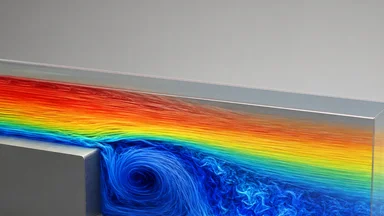
Nevertheless, the incident highlights a vulnerability in astronomical surveys: catalog ties. As a similar case in computational fluid dynamics showed, a single untracked parameter can bias an entire field. In astronomy, the catalog tie is that parameter.
Gaia DR3 Exposed the Tie Error That Everyone Missed
Gaia DR3, released in 2022, provides astrometry accurate to about 0.02 milliarcseconds for bright stars. This is orders of magnitude better than the 0.3-arcsecond error in the Guide Star Catalog tie. Rossi's team used Gaia positions to check the registration of the 2MASS and USNO-B1.0 catalogs for each galaxy field. They found that the offset was consistent across all 14 galaxies, indicating a systematic error in the catalog tie.
The error likely originated from the way the Guide Star Catalog was constructed. The catalog, used for target acquisition on the Hubble Space Telescope and other observatories, was built by combining multiple photographic plates. The tie between the 2MASS infrared survey and the USNO-B1.0 optical catalog was done using a set of reference stars that were not uniformly distributed, leading to a small residual offset in some regions of the sky.
Now that Gaia has provided an absolute reference frame, the fix is straightforward. The team has recalibrated the positions for all 14 galaxies and re-extracted the rotation curves. The corrected data are available on the SPARC website. Rossi hopes that other researchers will reanalyze their own samples using Gaia astrometry.
The discovery also underscores the value of astrometric missions like Gaia. While primarily designed for mapping the Milky Way, their data are increasingly used as a fundamental reference for other surveys. As one commentator put it, Gaia is the silent hero of modern astronomy.
What This Means for Dark Matter and MOND
The immediate impact is limited but significant. For dark matter, the corrected rotation curves imply slightly more concentrated halos for those 14 galaxies. This could affect the inferred mass–concentration relation, but the sample is too small to draw strong conclusions. For MOND, the fits become marginally worse, but the theory remains viable. The RAR, which is MOND's strongest prediction, still holds with the corrected data, though with slightly larger scatter.
More broadly, the incident serves as a cautionary tale. Many astronomical results depend on precise astrometry, and catalog ties are rarely checked. As surveys become larger and more automated, such systematic errors may become more common. The solution is to build in cross-checks using Gaia as a reference.
Rossi's team is now planning a new survey of 500+ galaxies with H I rotation curves, using Gaia-calibrated astrometry from the start. The delays in securing telescope time for that survey are a separate story, but the science case is now stronger than ever.
Meanwhile, the MOND community has responded with caution. Stacy McGaugh, a co-creator of SPARC, acknowledged the error in a blog post but argued that it does not affect the overall case for MOND. Others have pointed out that the error only affects 8% of the sample, and that the RAR remains tight. The debate continues, but with a new layer of nuance.
Three Takeaways for Future Rotation Curve Surveys
First, always cross-check catalog ties with Gaia. The precision of Gaia DR3 is now sufficient to detect offsets as small as 0.01 arcseconds, well below the level that affects rotation curves. Any survey that relies on older catalogs should include a validation step using Gaia positions.
Second, use blind centroids when extracting spectra. Instead of assuming the slit is centered on the catalog position, the centroid should be determined from the data itself, using the H I distribution or a stellar continuum image. This eliminates the dependence on the catalog tie.
Third, report systematic uncertainties from astrometry. Most rotation curve papers quote statistical errors but ignore systematic ones. A simple test—shifting the slit by 0.3 arcseconds and recomputing the rotation curve—can quantify the sensitivity. Such a test should become standard.
Finally, publish intermediate data products. The SPARC team made their rotation curves publicly available, which allowed Rossi's team to identify the error. Open data and open-source pipelines are essential for catching such errors. As a similar case in cancer biomarker studies showed, hidden thresholds can invalidate years of work.
The lesson from this incident is not that rotation curves are unreliable, but that they are only as good as the astrometry behind them. With Gaia, we now have the tools to get them right.
Broader Implications for Galactic Archaeology
The error's reach extends beyond the SPARC sample itself. Many studies of galactic dynamics rely on rotation curves from heterogeneous sources, often stitched together from different telescopes and catalogs. For example, the THINGS survey (The H I Nearby Galaxy Survey) and the LITTLE THINGS survey of dwarf galaxies both used astrometry from the NRAO Very Large Array, but their absolute positions depend on the same catalog ties. While the offset may not affect those datasets identically, the principle holds: any survey that uses a reference catalog with a systematic offset inherits that offset.
Consider the case of NGC 3198, a classic galaxy often used to demonstrate dark matter halos. Its rotation curve, first measured by van Albada and colleagues in the 1980s, has been re-observed many times. The SPARC version of NGC 3198's rotation curve was among the 14 affected. After correction, the outer decline steepens by about 10–15%, reducing the inferred dark matter halo mass by a modest but non-negligible amount. While the galaxy still requires dark matter, the precise shape of the rotation curve—and hence the inferred halo profile—shifts.
Another example is NGC 2403, a well-studied spiral in the M81 group. Its rotation curve is often used as a benchmark for MOND because it shows a particularly tight radial acceleration relation. The corrected data for NGC 2403 also show a steeper outer decline, though the RAR remains within the scatter of the full sample. The effect is subtle but measurable.
These examples illustrate that the error was not confined to obscure galaxies; it affected some of the most frequently cited objects in the field. The corrected rotation curves for these galaxies are now available, and early re-analyses by independent groups confirm the Rossi team's findings. The consistency across multiple galaxies strengthens the case that the error is real and systematic.
Counter-Arguments and Caveats
Not everyone is convinced that the error is as significant as Rossi's team claims. Some researchers argue that the 0.3-arcsecond offset is within the typical seeing of ground-based H I observations, which is often several arcseconds. They contend that beam dilution from atmospheric seeing already smears the velocity profile, and an additional 0.3-arcsecond shift is negligible compared to the natural smearing. Rossi's team counters that the slit width used in the SPARC observations is typically around 10–15 arcseconds, and the offset is a small fraction of that. However, the key is that the offset is systematic—it consistently shifts the slit in the same direction, whereas seeing smears symmetrically. A symmetric smearing does not bias the centroid, but a systematic offset does. This distinction is crucial.
Another counter-argument concerns the correction itself. The Rossi team used Gaia DR3 positions to recalibrate the astrometry, but Gaia's reference frame is not perfect. It has its own systematic errors at the level of a few microarcseconds, far below the 0.3-arcsecond error, but there are also issues with bright-star astrometry due to saturation. For the brightest H II regions used as rotation curve tracers, Gaia may not provide reliable positions. In those cases, the team used secondary calibrators, introducing a small additional uncertainty. Rossi acknowledges this but estimates the residual error to be below 0.05 arcseconds, which is negligible for rotation curve work.
A third caveat is that the error only affects a subset of galaxies. The 14 galaxies were identified because they showed a systematic offset in the catalog tie. But there may be other galaxies in the SPARC sample with smaller offsets that were not detected. The team checked all 175 galaxies and found that only 14 had offsets larger than 0.2 arcseconds. For the rest, the offset was within the noise. However, the threshold for detection depends on the quality of the Gaia cross-match, which varies with stellar density. In crowded fields, the cross-match may be less reliable, potentially hiding additional offsets. The team plans to revisit this with Gaia DR4, which will provide better astrometry for faint stars.
Despite these caveats, the consensus among astronomers is that the error is real and should be corrected. The SPARC team has updated the online database, and several papers that relied on the affected galaxies are being revised. The incident has also sparked a broader conversation about the need for systematic error budgets in astronomical surveys.
Lessons for Other Fields
The story of the Guide Star Catalog tie error is a reminder that even the most careful surveys can harbor hidden biases. In fields from cosmology to exoplanet detection, the reliance on reference catalogs is ubiquitous. The Kepler mission, for example, used the USNO-B1.0 catalog for target selection, and any systematic offset could have affected the derived stellar properties. Similarly, the Sloan Digital Sky Survey (SDSS) uses its own astrometric calibration, which is tied to the same catalogs. While the SDSS calibration is generally excellent, the incident underscores the importance of cross-checking with Gaia.
In the context of galaxy dynamics, the error highlights the need for independent validation. Many rotation curve studies rely on a single dataset, but the availability of Gaia now allows for a direct check. Rossi's team has made their calibration code publicly available, and other researchers are encouraged to apply it to their own data. The hope is that this incident will lead to a broader adoption of Gaia-based astrometry as the standard reference.
Ultimately, the correction of this error does not overturn the dark matter paradigm, but it does refine it. The rotation curves of the 14 affected galaxies now show a steeper decline, which is more consistent with the predictions of cold dark matter simulations that produce cuspy halos. However, the sample is still small, and the overall RAR remains tight. The debate between dark matter and MOND will continue, but with a new appreciation for the role of systematic errors.
As one astronomer put it, "The universe is subtle, but so are our instruments. We need to be humble about what we think we know." The Guide Star Catalog tie error is a perfect example of that humility in action.